
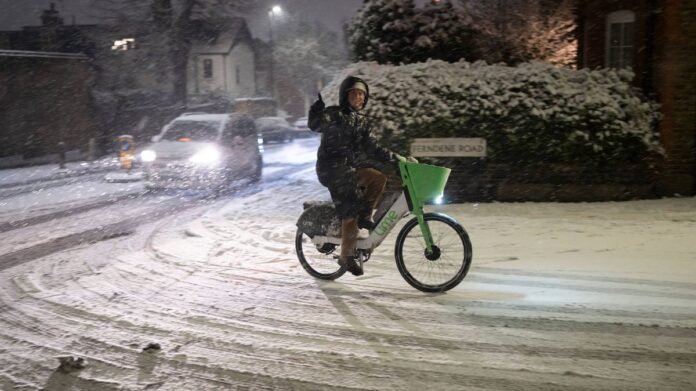

The idea that a cold winter predicts a hot summer brings some comfort to those enduring icy commutes, plumbing issues, and rising heating costs in this January chill. However, a recent study by Boksoon Myoung in 2021 found a connection between colder winters and hotter summers, but this was specific to South Korea. The Met Office reported last year as the hottest and sunniest on record, attributing extreme weather and prolonged droughts to global warming.
Despite the likelihood of another warm and sunny year leading to a warm summer, it may not be directly related to the current cold conditions. The Met Office refutes the belief that winter weather influences summer climate, emphasizing that winter and spring conditions do not dictate summer weather patterns. Therefore, enduring freezing winds and sleet now does not guarantee record-breaking summer temperatures, according to the Express.
The National Oceanic and Atmospheric Administration forecasts above-average temperatures in Florida and the southeast for the next three months, influenced by the El Nino cooling effect. In the UK, the Met Office predicts milder weather after January 11, followed by rain which may turn into snow in the north and east. The following week is expected to bring unsettled conditions with rain and wind, while the East will remain cold until late January. By the end of the month, more variable weather patterns may emerge.
These changes could result in a mix of fog, rain, wind, mild periods, frosty nights, and possible cold snaps nationwide. New maps based on MetDesk data from WXCHARTS suggest wintry conditions arriving on January 8. Snow is forecasted to cover most of the UK by Thursday morning, with only parts of South England and South Wales escaping the snowfall.
Temperatures are set to drop further during this cold week, with Aberdeenshire in Scotland possibly reaching a bone-chilling -14°C. Eastern parts of England may see -2°C, while the South West could experience temperatures up to 7°C.