
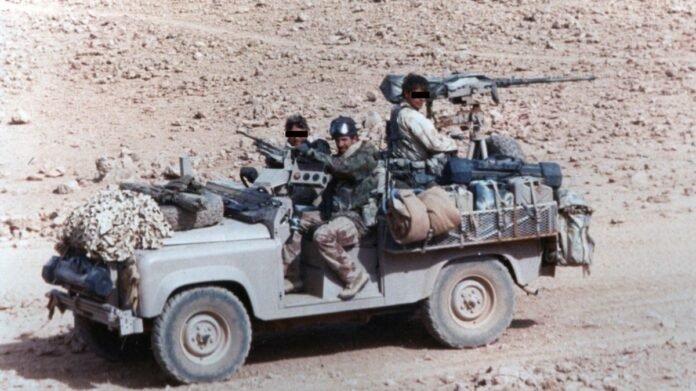

Decades after the Bravo Two Zero SAS mission stunned the world, new revelations have emerged about the iconic story that unfolded during the Gulf War. The operation, aimed at neutralizing Saddam Hussein’s Scud missiles, involved eight elite soldiers, with only one member, Chris Ryan, managing to evade capture and survive the harrowing ordeal in Syria.
Recent disclosures by SAS veteran Robert Craft shed light on the events that transpired following a decision by American General Norman Schwarzkopf. Craft revealed that in addition to the Bravo Two Zero team, two other SAS units, including Bravo One Eight and Bravo One Nine, were deployed simultaneously to eliminate Saddam’s Scud missile threat.
The Scud missiles, originally Soviet-made, posed a significant danger due to their extended range, which could potentially target Israel. Despite the availability of two full SAS squadrons for preemptive action, Schwarzkopf opted against their deployment, believing that air superiority would suffice in the conflict.
Craft explained that the decision not to send in the full squadrons earlier led to subsequent challenges in tracking and neutralizing the Scud sites. The failed Bravo One Eight mission highlighted the limitations of relying solely on air power without ground support.
The article also delves into Craft’s personal experiences during the mission, including engaging in a nine-hour firefight to destroy a Scud installation and capturing an Iraqi prisoner for valuable intelligence. Craft’s account provides a firsthand perspective on the intricacies and challenges faced by the SAS operatives during the Gulf War.
The story of Bravo Two Zero and its aftermath underscores the complex dynamics and strategic decisions that shaped one of the most daring missions in modern military history. Craft’s recollections offer a glimpse into the untold sacrifices and heroism displayed by the special forces soldiers in their mission against Saddam’s regime.