
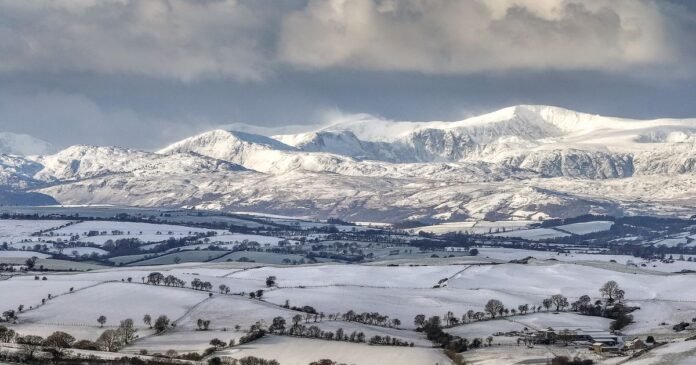

Hikers have been cautioned about the risk of avalanches on a popular mountain climb due to heavy snowfall in the country. An avalanche alert has been issued for Yr Wyddfa, also known as Snowdon, Wales’ highest mountain, as unstable snow conditions have raised concerns about potential serious falls and localized avalanches. The alert was issued by Llanberis Mountain Rescue Team (MRT) following the arrival of Storm Goretti.
In addition, six areas in Scotland are facing a “considerable” avalanche risk due to the current heavy snowfall and Arctic conditions. The Scottish Avalanche Information Service has identified risk areas in Creag Meagaidh, Glencoe, Lochaher, North Cairngorms, South Cairngorms, and Torridon. The service has warned that natural avalanches, including large and very large ones, may occur, especially on steep slopes.
Recent events on the A4086 Pen-y-Pass at Yr Wyddfa have been chaotic as visitors rushed to witness winter wonderland scenes. Llanberis MRT has highlighted that many paths on Snowdon are buried under snow, with higher sections of the Llanberis Path being particularly hazardous. Other popular routes, such as the Pyg Track, were also reported to have unstable sections.
The team cautioned that areas of unstable snow and cornices are present near the mountain’s peak, which could lead to serious falls or trigger local avalanches, especially where paths are close to steep terrain. Despite the allure of fresh snow, winter visits to the mountains of Eryri (Snowdonia) can be risky. According to Llanberis MRT, navigating these conditions requires experience, strong navigation skills, and an understanding of snow behavior, along with essential winter equipment like crampons and ice axes.
Furthermore, a “weather bomb” is expected to bring heavy snowfall and strong winds to the UK as Storm Goretti approaches. The Met Office has issued weather warnings for snow, wind, rain, and ice across the country, anticipating potential disruption and hazardous travel conditions. Neil Armstrong, the Met Office chief forecaster, highlighted the multi-hazard nature of Storm Goretti, emphasizing the significant impacts of snow in Wales and the Midlands, as well as strong winds in the South West.
Storm Goretti’s pressure drop is predicted to meet the criteria for a weather bomb, with rapid central pressure reduction leading to potentially damaging winds. The BBC reports that the storm is expected to cause a pressure drop of 36 millibars within 24 hours, which can bring down trees and cause structural damage.