
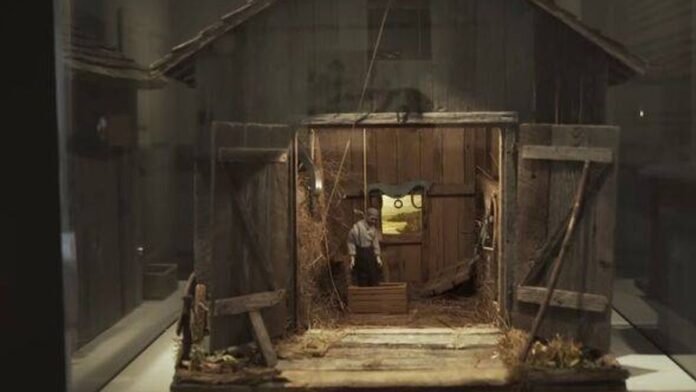

Intricately designed miniature crime scenes, featuring 18 meticulously crafted scenarios of death, were created to train upcoming detectives in the United States. Known as ‘dollhouses of death,’ these unique dioramas were the brainchild of Frances Glessner Lee, recognized as a pioneer in forensic science. Each miniature scene replicated real crime scenes and autopsies that Lee had personally witnessed.
Established in 1945 at Harvard University, Lee’s department of legal medicine showcased these dollhouse crime scenes during a time when forensic science faced technological limitations. The attention to detail in the doll victims, including bruise simulations and post-mortem effects like bloating, impressed experts worldwide. Lee’s personal experiences at autopsies inspired the accuracy and realism of each miniature scenario.
Despite facing educational restrictions early in life, Lee’s passion for forensic pathology was ignited by a chance encounter with a death investigation specialist. With a substantial inheritance, she pursued her dream of advancing forensic science by founding the Harvard Department of Legal Medicine and the Harvard Associates in Police Science. Lee’s dedication led to the creation of the Nutshell Studies of Unexplained Death, aimed at convicting the guilty, exonerating the innocent, and uncovering the truth in each case.
Through seminars and training sessions, Lee engaged students in solving crimes based on the dollhouse scenarios she meticulously designed. The dollhouses, funded by her inheritance, became instrumental in educating law enforcement officials. Following Lee’s passing in 1966, the dollhouses were entrusted to the Maryland Medical Examiner’s Office in Baltimore, where they continue to train future detectives through the Frances Glessner Lee Homicide School.
The legacy of Frances Glessner Lee lives on as her dollhouses remain untouched and continue to serve as essential tools in shaping the skills of America’s law enforcement officers.