
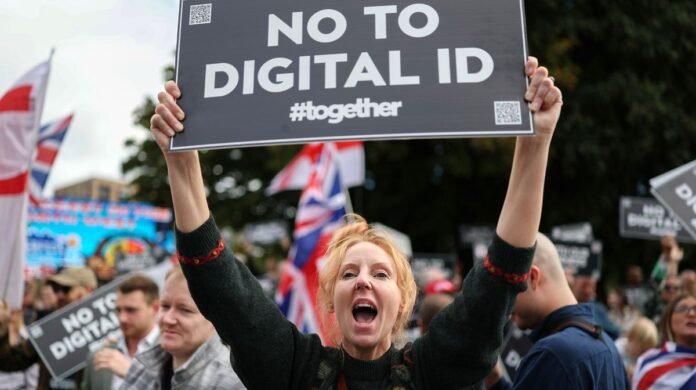

Keir Starmer is reportedly planning to reduce the scope of digital ID proposals following significant public opposition.
The contentious initiative is expected to be diluted upon its launch in 2029, as per reports from The Times. Alternative digital identity cards will be allowed to verify the right to work.
While the Government asserts that the project will not be completely abandoned, the decision to backtrack comes in response to a widespread outcry, with nearly three million individuals signing a petition against its implementation. Initially, Government-issued digital ID cards, a flagship initiative of the Prime Minister, will not be obligatory, with individuals having the option to utilize electronic visas and passports instead.
According to Lib Dem Cabinet Office spokeswoman Lisa Smart, the government’s frequent policy reversals are creating skepticism. She criticized the digital ID scheme, labeling it as a costly endeavor that would yield no tangible benefits.
There were concerns within the Government that enforcing mandatory usage was overshadowing other crucial discussions. A source informed The Times that stepping away from compulsory requirements would address a major point of contention and prevent scenarios where individuals, like a 65-year-old in a remote area, could be prevented from working due to a lack of digital ID.
No10 maintains that the policy is not being abandoned, emphasizing the necessity of mandatory digital right-to-work checks to combat fraud and enhance efficiency. The specifics of the digital ID scheme will be disclosed following a comprehensive public consultation, with a focus on streamlining public services.
Keir Starmer has previously championed the digital ID project as a means to identify unauthorized individuals in the country. He emphasized the importance of addressing illegal immigration and stated that possessing a digital ID would be a prerequisite for working in the UK.
A consultation on the plans is expected to launch soon. In November, MPs were briefed that the Government’s digital ID strategy had encountered significant setbacks, rendering it unfeasible.
Silki Carlo from Big Brother Watch raised doubts about the intentions behind the mandatory digital ID, suggesting broader implications beyond combating illegal employment. She expressed skepticism about the government’s handling of the announcement, indicating potential long-term repercussions.
For more news updates, consider selecting Daily Mirror as a ‘Preferred Source’ on Google News.