
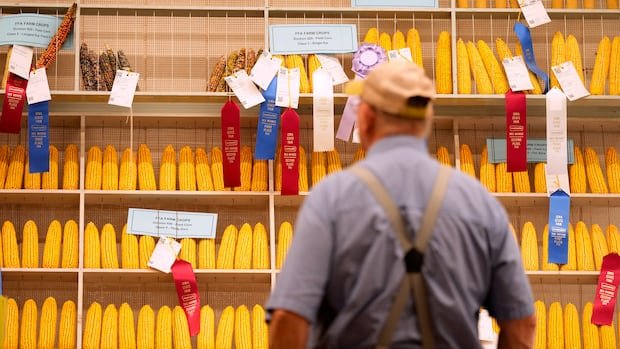

This weekend, a significant number of individuals are participating in the Iowa State Fair, an event that offers various entertainment options, a rodeo, and a traditional butter cow sculpture crafted annually since 1911. Similar to the Calgary Stampede in Canada, the Iowa State Fair serves as a crucial platform for politicians to engage with voters, particularly as the U.S. midterms approach. One pressing issue on the minds of Iowans this year is the impact of President Donald Trump’s trade policies.
According to Aaron Lehman, the president of the Iowa Farmers Union and a fifth-generation family farmer, the trade war initiated by President Trump has caused confusion and hardship for farmers. Many international trade partners have shifted their business elsewhere due to the unpredictable nature of U.S. trade policies. This situation poses a significant concern for farmers like Lehman, especially since Canada, Iowa’s largest export market, could face a substantial impact if Trump proceeds with imposing 50% tariffs on Canadian goods on August 19.
The economic uncertainties have made succession planning and farm operations challenging for Lehman and others in the farming community. The strain from these policies has led to a strained relationship between Trump’s administration and Iowa farmers, reflecting in the tightening political landscape leading up to the midterm elections.
In Iowa, farmers like Jack Ploen from Avoca express unease over Trump’s economic agenda, particularly concerning Canada, a vital trading partner. The sentiment is echoed by other farmers who believe that while some of Trump’s policies may have merit, they have also alienated key trading allies and disrupted established trade relationships. This sentiment extends to the political realm, with polling data indicating a shift towards more competitive races in the upcoming elections, reflecting the challenges faced by farmers and families due to the ongoing economic turmoil.
U.S. Trade Representative Jamieson Greer defended Trump’s tariff tactics during a recent visit to Iowa, emphasizing the administration’s commitment to bolstering American industry competitiveness through tariffs and tax cuts. Despite mixed opinions within the Republican camp regarding the tariffs, the economic repercussions are a point of contention, with some advocating for a renegotiation of trade agreements like the Canada-U.S.-Mexico Agreement for fairer market access.
The ongoing negotiations between Canada and the U.S. to avert the looming tariff deadline remain challenging, with major disagreements still unresolved. While efforts are being made to bridge the gaps, the stalemate persists, with both sides maintaining their positions. The discussions also involve considerations about adjusting sectoral tariffs on autos, with Canada seeking more favorable terms. As the talks continue, both countries are preparing for various scenarios, including potential changes to trade agreements and rules governing cross-border trade.