



In the vast African savannah, elephants are playing a crucial role in the ecosystem even after they die.
A recent study conducted by an international research team in South Africa’s Kruger National Park reveals that elephant carcasses continue to impact the environment significantly post-mortem.
Known as “ecosystem engineers,” these majestic animals shape the savannah during their lifetime by creating waterholes, altering vegetation, and toppling trees. However, the study aimed to explore if their influence persisted beyond death.
Lead author Courtney Reed, an ecologist, explained that the study, published in the Proceedings of the National Academy of Sciences of the United States of America, aimed to investigate if the nutrients from elephant carcasses continued to enrich the ecosystem post-decomposition.
Sustainable Regeneration Cycle
Through an analysis of soil chemistry and biodiversity around these megacarcasses, the researchers discovered that decomposition released significant nutrient pools into the soil. This process boosted microbial activity, promoting the growth of nutrient-rich plants that attracted herbivores long after the elephant carcass had decayed.
The research revealed that the effects of decomposition persisted for over seven years, although initially, the high nutrient concentration from the carcasses led to vegetation depletion, creating barren patches known as “cold spots” in biodiversity.
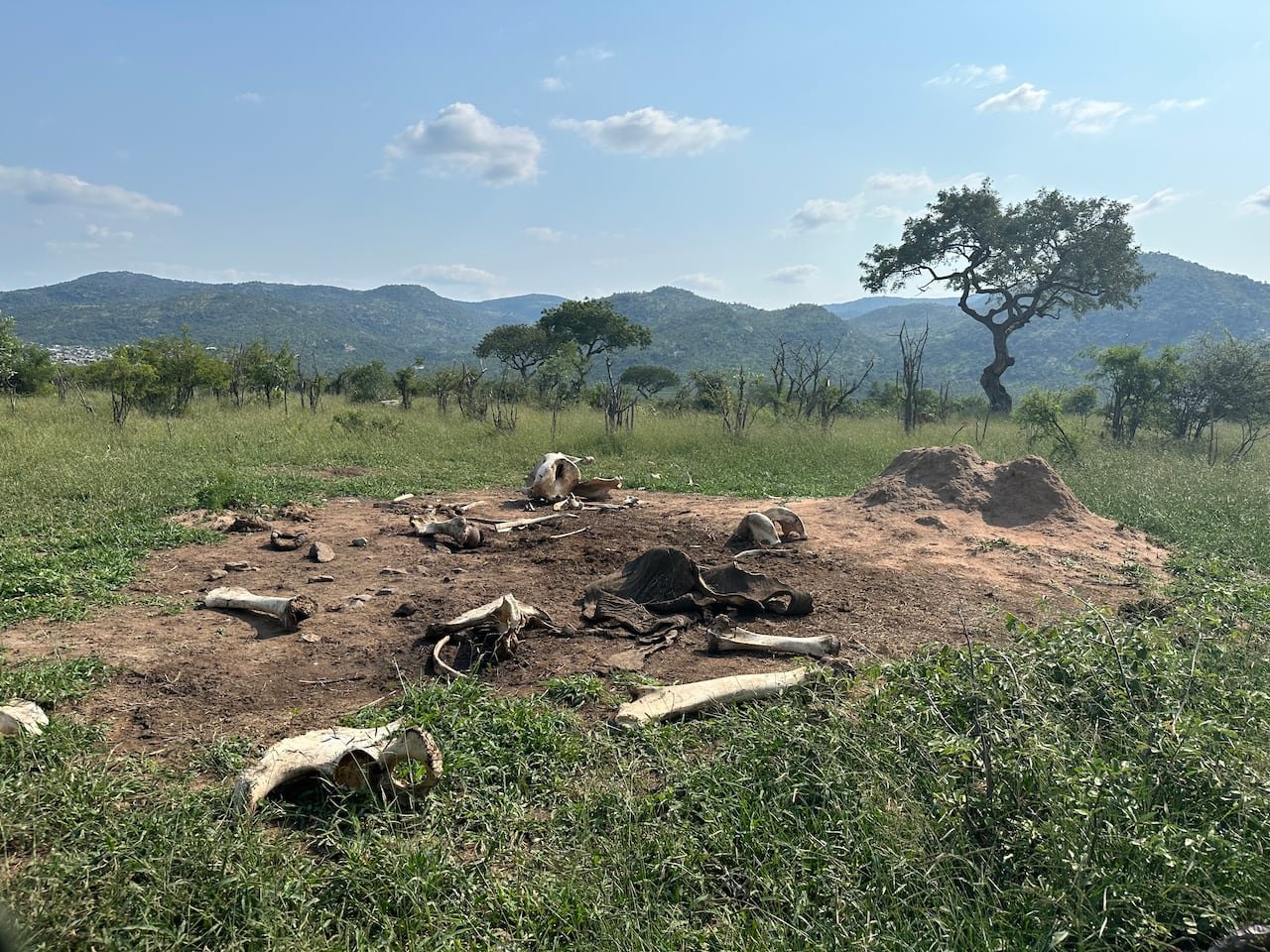
The study found that the high concentration of nutrients in elephant carcasses initially kills off vegetation around the place of decomposition, leaving large bare patches or ‘cold spots’ in biodiversity. (Submitted by Courtney Reed)</p