
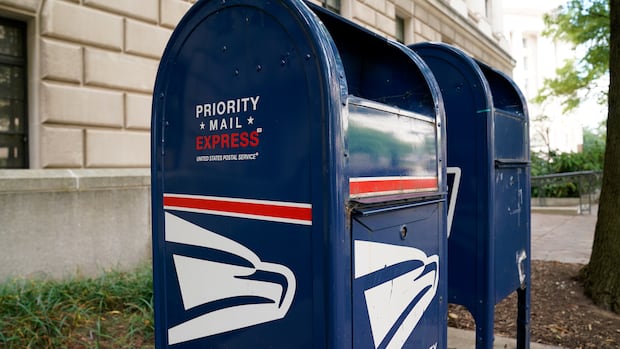

On Monday, the U.S. Supreme Court opted not to permit the U.S. Postal Service to implement a regulation aimed at mail-in ballots, representing a blow to U.S. President Donald Trump’s attempts to limit mail voting ahead of the upcoming midterm elections in November that will influence Congressional control.
The justices turned down the Justice Department’s appeal to overturn a decision by U.S. District Judge Indira Talwani in Boston, which prevented the U.S. Postal Service from applying the rule while legal disputes from states and voting rights organizations are underway. This measure was adopted by the agency following a March executive order from Trump, which sought to tighten regulations surrounding mail voting.
In their brief, one-paragraph order, the court stated, “The government is unlikely to succeed on the merits of its challenge to the District Court’s preliminary injunction.”
Justice Samuel Alito, along with fellow conservative Justice Clarence Thomas, expressed dissent regarding Monday’s ruling, likening some of the challengers’ arguments to a “Hail Mary pass” that is “unlikely to be successfully completed,” using a sports metaphor.
Alito further remarked, “The Postal Service has broad authority to regulate the mail.”
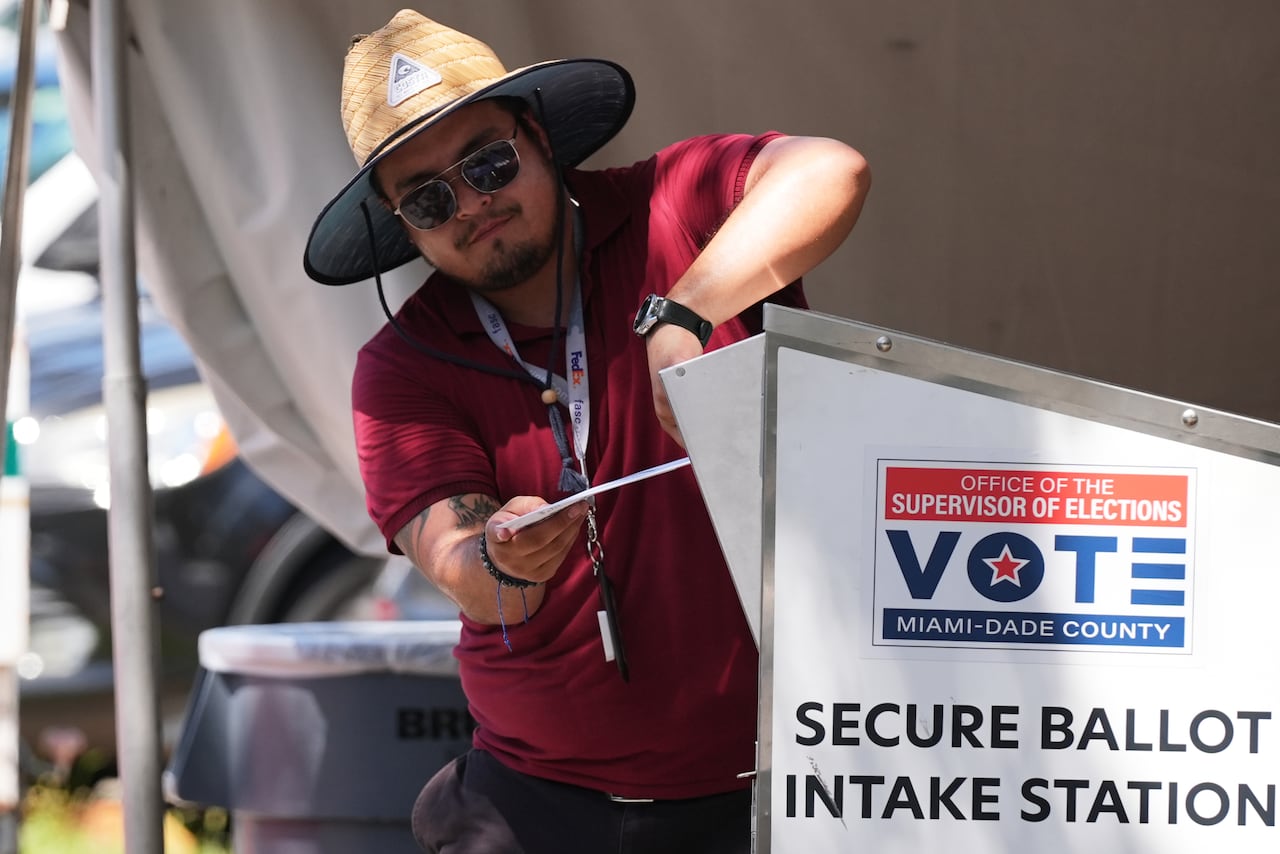
An election worker places a vote-by-mail ballot into a secure bin at the Miami-Dade County Supervisor of Elections Office during the Florida primary election, Aug. 18. (Lynne Sladky/The Associated Press)
No other justices publicly dissented. The court currently holds a conservative majority of 6-3.
Expressing frustration over the ruling on social media early Tuesday, Trump pointed out that the two dissenting justices were already serving when he began his first presidential term.
Referring to the justices he later nominated—Neil Gorsuch, Brett Kavanaugh, and Amy Coney Barrett—Trump stated, “These are not the individuals I interviewed to serve on the United States Supreme Court; they are just a shadow of their former selves.”
Mail-in voting restrictions could favor Republicans
Trump’s fellow Republicans are engaged in a fierce contest to maintain Congressional control during the midterms. Limiting mail-in ballots could advantage Republicans, as various polls indicate that Democratic voters predominantly utilize mail-in voting.
According to the new regulation, states are required to submit lists of mail ballot recipients to the Postal Service and utilize agency-approved outgoing and return ballot envelopes that feature unique barcodes. Consequently, the Postal Service could refuse to dispatch ballots that do not meet the new criteria or are linked to voters not listed.
Critics warn that this plan could jeopardize the delivery of countless legitimate ballots as the November 3 midterm election nears, potentially causing turmoil, especially with many states planning to send mail ballots to eligible voters shortly.
On September 4, Talwani issued an injunction halting the rule, concluding that it likely contravened the U.S. Constitution, which grants states the authority to manage elections. She also noted that compliance would be unfeasible for states given the quickly approaching midterms.
Additionally, U.S. District Judge Carl Nichols in Washington, D.C., ruled against the new regulation on Sunday.
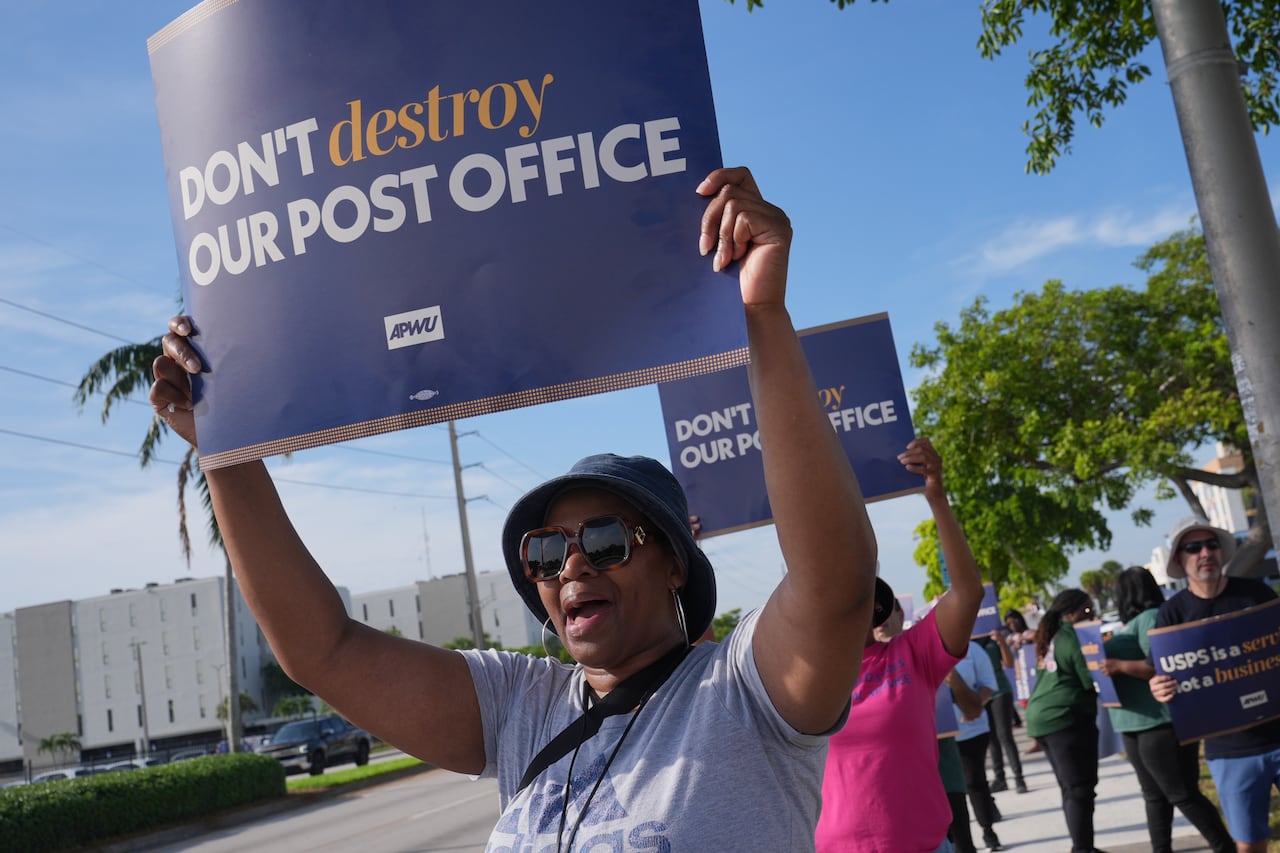
An individual demonstrates against proposed changes to the U. S. Postal Service and Trump’s executive order regarding mail-in ballots July 28. (Marta Lavandier/The Associated Press)
‘Pushing the boundaries’ of authority
Sophia Lin Lakin, the voting rights project director at the American Civil Liberties Union, which played a role in representing some challengers to the USPS regulation, praised the decision made on Monday.
“This administration continues to push the boundaries of its power, treating the rules governing our elections as mere suggestions to dismiss when they conflict with the president’s agenda. However, the Constitution assigns states and Congress the responsibility for setting the rules for federal elections—not the president or the Postal Service,” she stated.
“Today marks a positive moment for democracy, the rule of law, and the American populace aiming to exercise their constitutional voting rights,” remarked California Governor Gavin Newsom, whose state was a leading party in one of the lawsuits against the regulation.
“Trump’s assaults on democracy over the past 20 months have been unequivocally un-American.”
Trump frequently votes by mail
Although Trump signed his executive order targeting mail-in ballots after years of expressing doubts about their security, he himself often votes by mail. Trump has made unfounded claims of widespread fraud in U.S. elections, alleging that such fraud contributed to his 2020 defeat to former Democratic President Joe Biden.
In a Sept. 6 emergency request, the administration urged the Supreme Court to permit the implementation of an “important federal policy to safeguard the mail from being exploited for voter fraud.”
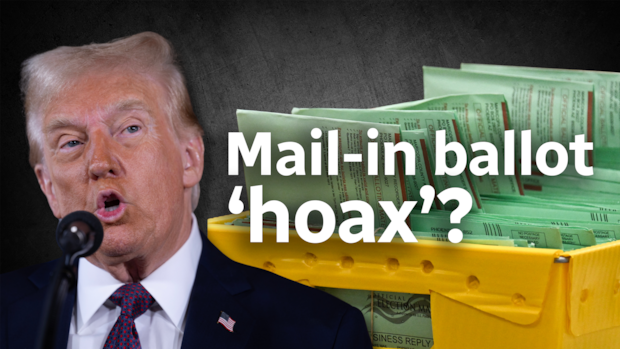
President Donald Trump wants to do away with mail-in voting, claiming it’s responsible for ‘massive voter fraud’ in the U.S. Andrew Chang explores what might really be behind Trump’s contempt for mail-in ballots and what he can actually do about it.
Images provided by Getty Images, The Canadian Press and Reuters.
The 1st U.S. Circuit Court of Appeals in Boston rejected last Thursday the request to suspend Talwani’s order. The 1st Circuit stated that the rule “will likely lead to the disenfranchisement of millions of voters nationwide while providing minimal—if any—advantage in combating voter fraud.”
Nichols granted a preliminary injunction blocking the rule in response to a request from the Democratic Party and organizations such as the NAACP. He noted that the regulation could complicate mail voting for some individuals and that it exceeded the Postal Service’s authority.
“No statute grants the Postal Service the authority to enforce key elements of the rule,” Nichols stated.
All 50 states permit some form of mail-in voting. Among these, 29 states allow voters to request mail ballots without needing to provide a justification, while eight conduct their elections entirely by mail.
The conflict over mail ballots is part of a broader series of attempts by the administration to increase federal oversight in voting as the midterms approach. On August 24, the Supreme Court lifted a previous injunction imposed by Talwani in June, which had blocked Trump’s executive order and the USPS regulation prior to its finalization.