
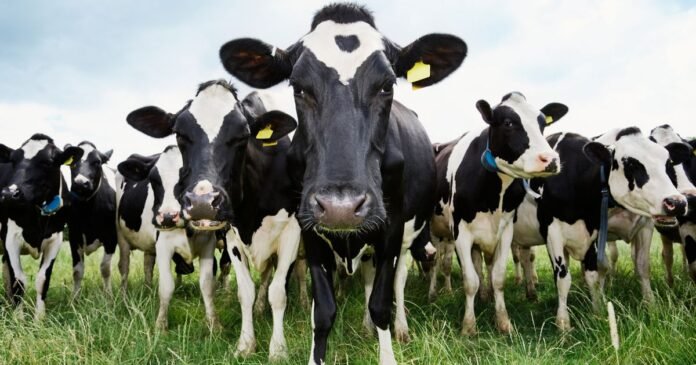

Cow dung is being recognized for its potential to heat numerous UK households and create thousands of jobs. While cattle farming has been criticized for its methane emissions and environmental impact, the manure produced by the animals is now being utilized to produce biomethane for the gas network. This process involves anaerobic digesters that break down organic materials like agricultural and food waste.
Currently, there are approximately 130 biomethane plants in the UK, supplying enough energy for around one million homes, with ongoing developments set to increase this number to 1.2 million. In Somerset, two villages, Nether Stowey and Over Stowey, with a total of 1,400 residents have been receiving biomethane from a local farm for the past ten years. The GMB union sees great potential in this technology, advocating for government support to scale up production.
The union proposes increasing biomethane production to 50 terawatt hours by 2030 and 120 terawatt hours by 2050, which could meet 90% of the country’s gas needs and generate over 60,000 jobs. Despite the UK producing 82 million tonnes of livestock manure annually, less than 1% is currently utilized for biomethane production.
On a global scale, the International Energy Agency suggests that biogas, derived from organic materials like cow manure, could fulfill 20% of the current global demand for natural gas. Beyond heating, biomethane is also being explored for various applications.
In 2023, Waitrose announced plans to power tractors at one of its farms in Hampshire using renewable natural gas, becoming the first UK retailer to do so. Andy Prendergast, GMB National Secretary, emphasizes the potential of cow dung in the country’s clean energy future, highlighting its similarity to natural gas, low carbon footprint, and renewable nature.
While some remain skeptical about the role of biomethane in meeting the UK’s gas demands, a study by the MCS Foundation charity projects that biomethane could potentially account for up to 18% of the country’s gas needs by 2050. Garry Felgate, the foundation’s chief executive, believes in the importance of biomethane for decarbonization but questions its suitability for residential heating.
Despite differing opinions, the push for utilizing cow dung and other waste for energy production continues, with ongoing debates on the role of biomethane in the UK’s energy transition.