
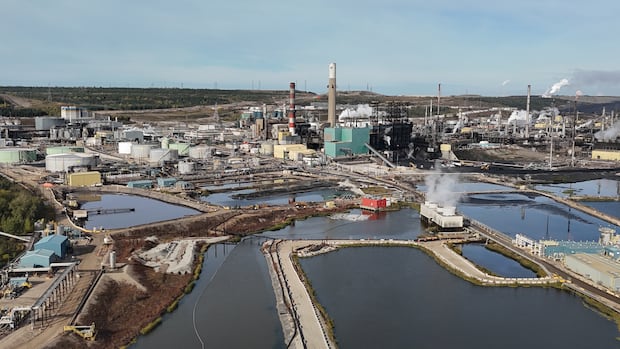

The government of Alberta is set to roll out a new royalty program aimed at reducing the capital investment necessary to initiate fresh developments and expansions within the oilsands sector.
Under the Oil Sands Growth Program (OGP), approved initiatives will benefit from a lowered royalty rate of two percent for the initial five years of production. This rate will increase by one percentage point each year until it reaches six percent in the ninth and tenth years.
Premier Danielle Smith anticipates that this initiative will attract investors, especially as Alberta targets a production goal of 8 million barrels of oil daily by 2035. As of Friday, Smith noted that the province is currently producing approximately 5 million barrels.
“To achieve our objective of doubling oilsands production in the next decade, we require hundreds of billions in new investments, all while competing with the United States and Venezuela,” Smith stated at a news conference in Calgary, where the introduction of the new program was announced.
“The battle for global investments is significant. Major energy projects demand billions in capital and extensive planning over years.”
According to Smith, the OGP will diminish initial financial hurdles for new projects and expansions, particularly as advocates of the Pacific Link pipeline seek companies to utilize upcoming capacity.
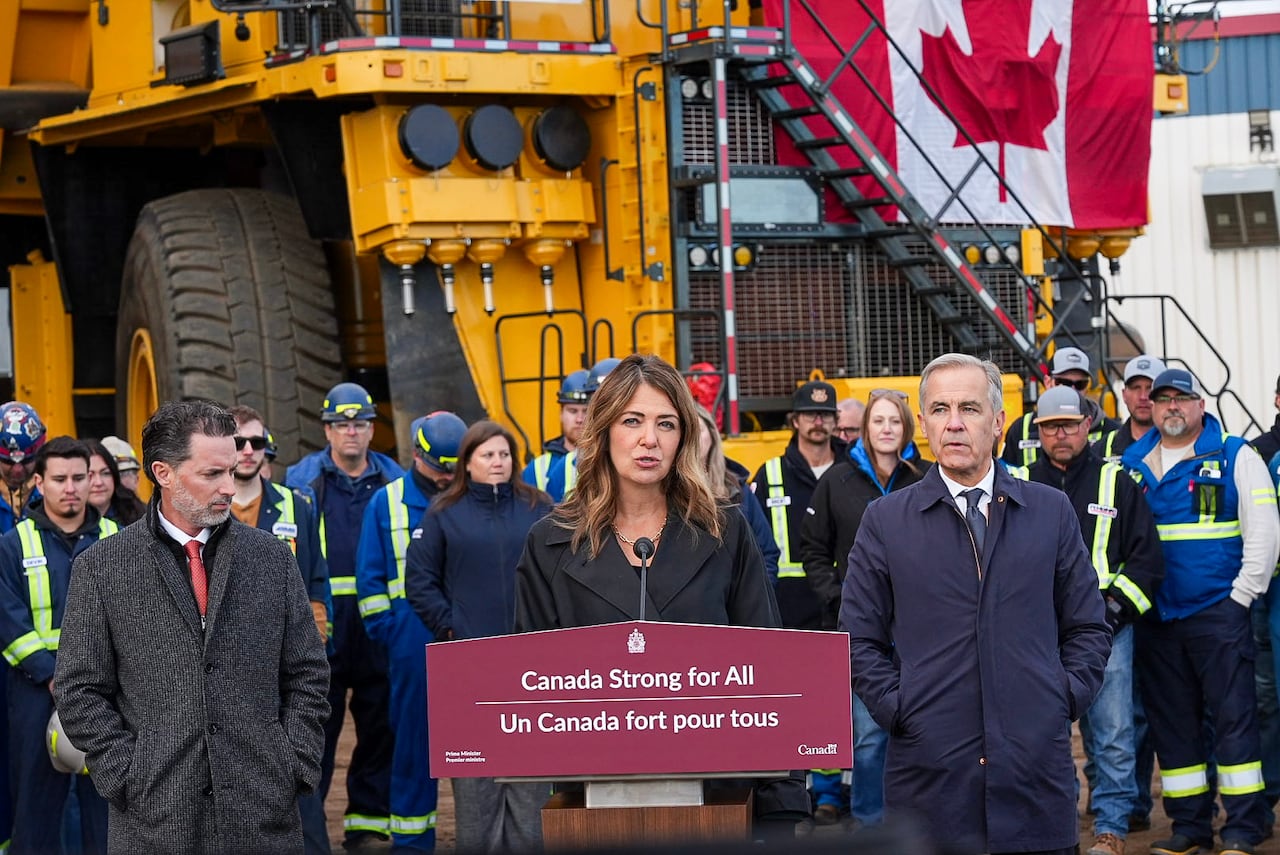
Alberta Premier Danielle Smith, alongside Pembina Pipeline CEO Scott Burrows and Prime Minister Mark Carney, at a press conference north of Fort McMurray, Alta. on Oct. 1, 2026, announcing the designation of the Pacific Link pipeline as a project of national significance. (Vincent McDermott/CBC)
Smith clarified that the OGP will not replace the current royalty framework or ensure project approvals, and that it will still comply with environmental and Indigenous consultation mandates.
The eligibility for the program will extend beyond the five companies represented by the Oil Sands Alliance, which includes the nation’s largest oilsands firms. Project approvals will be evaluated individually and can encompass expansions.
After ten years, companies will revert to the standard royalty system, or if they fail to meet production, environmental, or regulatory standards.
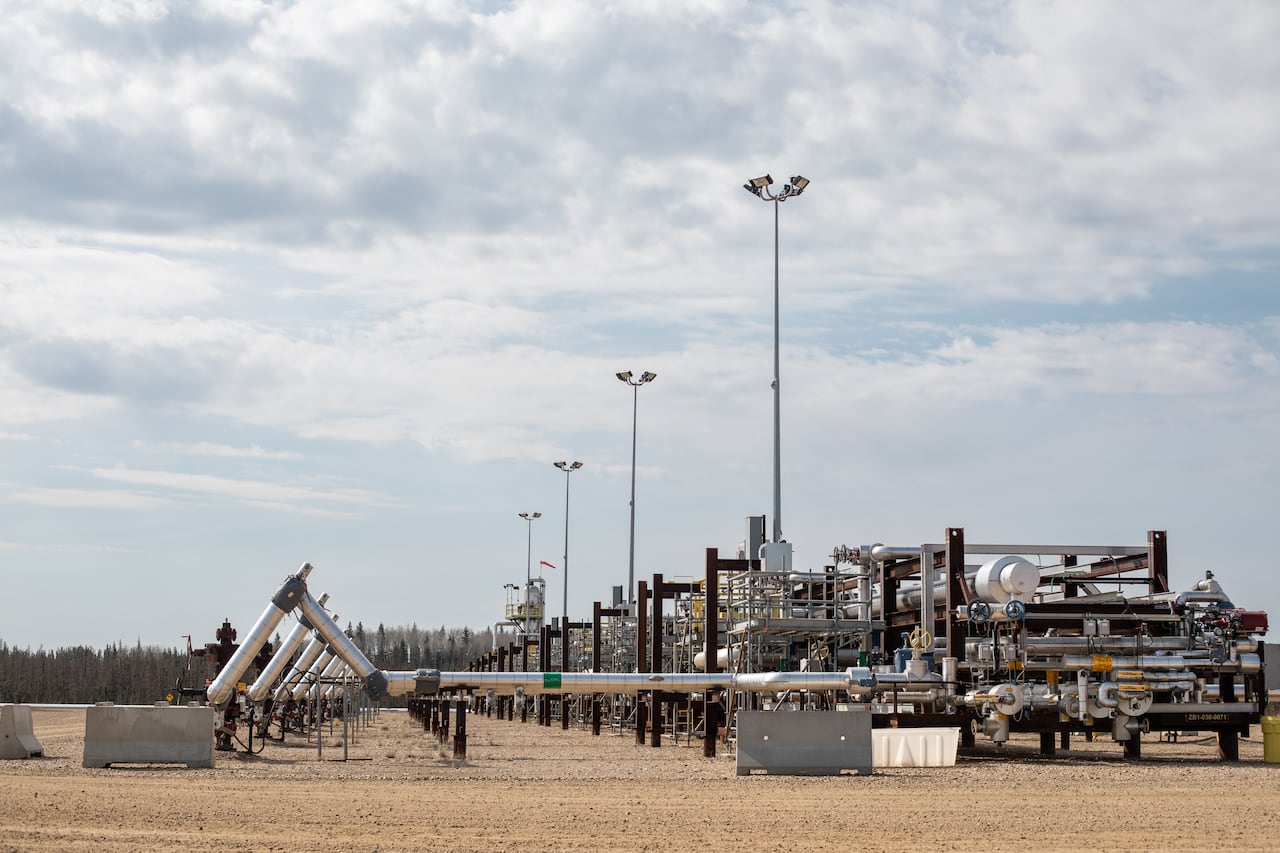
Steam-assisted gravity drainage (SAGD) pads at Cenovus Energy’s Christina Lake oilsands facility, located southeast of Fort McMurray, Alta., on Wednesday, April 24, 2024. Company representatives state this pad, which utilizes the latest technology, requires less energy per wellhead to extract bitumen than earlier models. (Amber Bracken/The Canadian Press)
The Alberta government aims to implement the OGP this spring, with qualifying projects announced after November 15 still being considered eligible. Smith mentioned that the province plans to evaluate the program’s impact three years from now, specifically in December 2029.
In contrast to the existing royalty structure, the OGP will not link rates to West Texas Intermediate oil prices. Alberta Energy Minister Brian Jean indicated that should the regular provincial royalty rate be lower than the incentive rate, the company will pay the lower amount.
“Oilsands projects rank among the largest and most capital-intensive energy investments worldwide. Companies require a highly competitive investment climate and assurance in that fiscal structure,” Jean remarked.
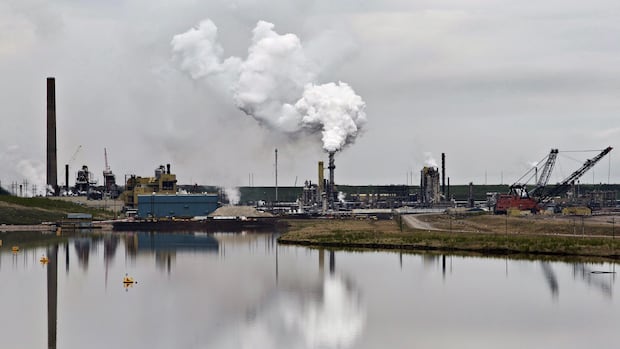
The Alberta government is introducing a royalty incentive program, the Oil Sands Growth Program, that it says will help the province meet its 2035 goal of doubling current oilsands production by easing the capital investment needed to kick-start new developments.
Smith highlighted several regulatory rollbacks as successes for the oilsands sector, including the federal government’s scrapping of its oil-and-gas emissions cap and net-zero power regulations. She commended the progress made regarding the Pacific Link pipeline, noting that recent polls indicate strong support among Canadians and Indigenous communities for advancing the nation’s oil and gas industry.
Kendall Dilling, president and CEO of the Oil Sands Alliance, acknowledged that there remains much work to be done for the sector to realize its full potential, particularly in updating and streamlining regulatory frameworks. However, he noted that both the government and industry have been actively addressing these issues, leading to improved investment conditions over the past year.
“Today, I feel more optimistic than ever,” Dilling expressed during Friday’s news conference.
-
Analysis
Danielle Smith wants to double Alberta oil production. Can she bring back the boom?
-
Ottawa wants to expand the oilsands, but the industry’s wastewater problem will grow with it
Janetta McKenzie, the oil-and-gas director at the Pembina Institute, a clean-energy think tank, expressed skepticism regarding the necessity of the OGP to stimulate investment, “especially given the taxpayer-funded pipeline and several recent tax breaks introduced by the federal government,” she commented to CBC News.
“The oilsands sector has been quite profitable for a long time and is well-established … this is not an industry that has been facing revenue challenges in recent years.”
She is concerned that Alberta might forfeit oil revenues by eliminating price fluctuations while companies reap significant profits. McKenzie also raised questions about the environmental impacts of increased production.