
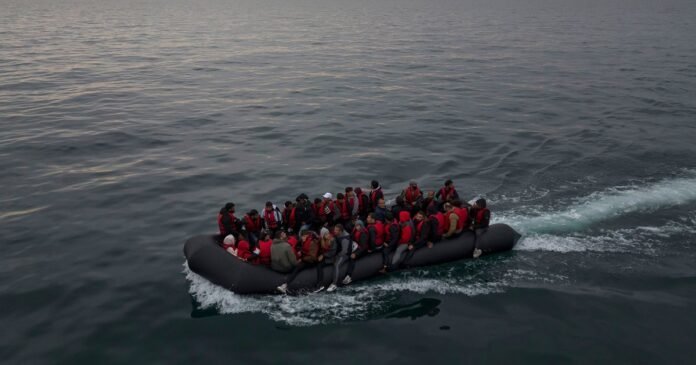

Brexit has emerged as a significant factor driving small boat crossings, according to testimony provided to Members of Parliament. Witnesses revealed that individuals entering the UK illegally express reluctance to be sent back to their first EU entry point under the Dublin Convention. Meghan Benton, Director for Global Programs at the Migration Policy Institute, highlighted that Brexit has introduced a new dynamic.
The Dublin Convention permits the return of asylum seekers to their initial EU arrival country. Following the UK’s exit from the EU, no alternative agreement was established; however, the UK and France are currently testing a ‘one-in-one-out’ returns system to discourage crossings.
During a session with the Home Affairs Select Committee, Ms. Benton acknowledged the challenge of obtaining concrete evidence on the impact of Brexit on small boat crossings. Some individuals in northern France have expressed concerns about being returned to their first entry point or facing a return order, indicating a perception that the UK offers additional asylum opportunities.
Critics argue that the absence of a returns agreement with Europe has benefitted smuggling networks. French President Emmanuel Macron suggested that Brexit has hindered the UK’s ability to deport individuals, potentially encouraging more crossings.
Opposition leader Keir Starmer labeled the small boats as “Farage boats,” criticizing Nigel Farage for his inaccurate claims during the Brexit campaign. Experts emphasized the need to enhance the ‘one-in-one-out’ return arrangement with France to dissuade further crossings.
Dr. Mihnea Cuibus from the Oxford Migration Observatory explained the decision-making process for asylum seekers, emphasizing the importance of a high likelihood of return to deter risky Channel crossings. Consideration of the significant risks individuals undertake and the factors influencing their choice to attempt the crossing were highlighted as crucial in addressing the ongoing issue.