

Parts of British Columbia are experiencing significant drought conditions this summer. In Bessette Creek, water use restrictions have been enforced to safeguard salmon populations from critically low water levels. Additionally, temporary protection orders for the Salmon River watershed were initially implemented in July, temporarily lifted due to heightened wildfire risks, and then reinstated in August. These actions reflect the dire situation in various watersheds that necessitate government intervention.
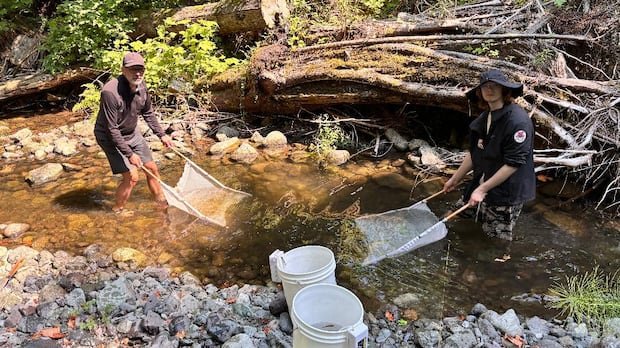
Bob Crandall, the treasurer of the Cowichan Lake Salmonid Enhancement Society, notes a concerning trend of diminishing water levels in the 16 streams linked to Lake Cowichan that the society oversees. To mitigate the impact, the society conducts fry salvage operations, rescuing fish from depleting rivers and transferring them to alternative water bodies as a proactive measure to counter human-induced environmental challenges.
While these interventions are seen as vital by many communities in British Columbia, experts caution that such efforts have limitations and may not offer a sustainable long-term solution. Collaborating with the Ts’uubaa-asatx Nation and volunteers, Crandall and his team engage in relocating various fish species like salmon, trout, and char to more viable habitats. However, the changing climate is making this task increasingly arduous. Streams are drying up farther upstream than before, necessitating more extensive efforts to secure the fish populations.
In these challenging circumstances, the society employs aerators and bubblers to ensure the fish have sufficient oxygen during transport. The process involves carrying water, fish, and equipment across dry streambeds, which becomes particularly demanding in hot weather conditions. Crandall, with his lifelong affinity for fish, emphasizes the importance of preserving these aquatic species within the ecosystem through proactive measures like fry salvage operations.
The Ts’uubaa-asatx Nation plays a crucial role in these conservation efforts, aiding in relocating fish populations and monitoring stream conditions using drones. Michelle Corfield, the lands and resource director for the Nation, underlines the significance of salmon as a fundamental resource for the community, emphasizing the need for sustainable conservation practices to ensure the continued presence of salmon for future generations.
Elsewhere, similar rescue initiatives are encountering challenges as drought and extreme heat intensify. In France, the Fédération de Pêche du Rhône faces unprecedented difficulties due to severe drought conditions. Relocating fish has become increasingly ineffective, with extreme weather events occurring more frequently than historical patterns suggest, posing severe threats to aquatic ecosystems.
Jean-Pierre Faure of the Fédération de Pêche du Rhône highlights the detrimental effects of climate change on fish populations, citing instances of fish crowding in small water volumes due to low river flows. The physiological stress on fish from rising water temperatures, exacerbated by climate change and industrial activities, underscores the urgency for comprehensive ecosystem restoration and sustainable water management practices to address the underlying issues.
Faure emphasizes the need to shift focus from short-term interventions like rescue fishing to holistic ecosystem restoration, as the scale and complexity of the challenges faced by aquatic habitats necessitate broader, sustainable solutions. Addressing these issues requires a multifaceted approach that considers long-term ecosystem health and resilience, moving beyond immediate interventions that may offer temporary relief but fail to address the root causes of environmental degradation.