
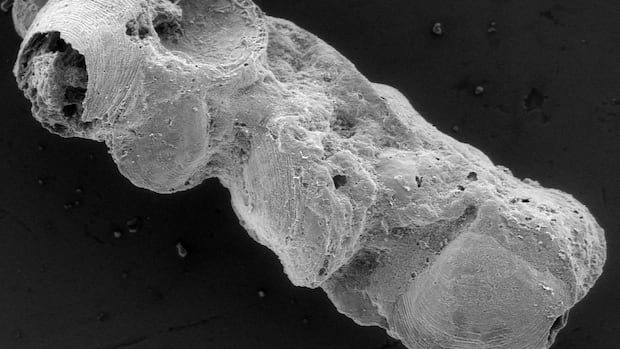

Long before dinosaurs existed, a surge in biodiversity led to the emergence of early versions of modern animals and an increase in fecal matter. Although not widely discussed in paleontology, a recent study sheds light on how the examination of coprolites, or fossilized feces, aids in understanding Earth’s ancient ecosystems, nutrient cycles, and present-day animal relationships.
Published in the journal Trends in Evolution & Ecology, the research delved into the analysis of fecal fossils from the Cambrian period, dating back approximately 540 million years. By studying fecal records from primitive worms, invertebrates, and mollusk-like creatures, scientists discovered that fecal matter likely played a crucial role in enhancing deep-water ecosystems’ habitability and nutrient availability during that era, long before the age of dinosaurs.
The study’s revelation that feces were prevalent during the Cambrian period holds significance for unraveling the origins of contemporary oceanic ecosystems. Julien Kimmig, one of the study’s authors and head of the paleontology division at the Karlsruhe Natural History Museum in Germany, emphasized the vital role of feces in sustaining both ancient and modern marine ecosystems, underscoring the importance of understanding the driving forces behind ecosystem dynamics and evolution.
Examining coprolites, fossilized and mineralized feces found in rock formations, provides valuable insights into the composition of ancient ecosystems and sheds light on the intricate interplay between organisms. By analyzing hundreds of coprolites from various global deposits, researchers like Kimmig and co-author Russell Bicknell uncovered a diversity of fecal matter from burrowing worms, arthropods, brachiopods, and hyoliths, tracing the evolution of fecal size and content through the Cambrian period.
Beyond serving as indicators of evolutionary processes and predator-prey dynamics, coprolites offer valuable clues about Earth’s ecological systems and the transformative effects of the Cambrian Radiation, a period characterized by the sudden appearance of modern animal groups in the fossil record. Understanding how ancient ecosystems adapted to environmental changes can provide critical insights into predicting future ecological shifts.
Focusing on the Cambrian period, paleontologists highlight the significance of fecal studies in elucidating pivotal events in Earth’s history, such as the Cambrian Radiation, which paved the way for the diversification of modern animal lineages. By examining fecal evidence, researchers gain a deeper understanding of nutrient cycles, energy flows, and their impacts on biodiversity, transcending the study of individual organisms to comprehend the broader ecological and geological contexts of ancient eras.
Karen Chin, a paleontologist and curator at the University of Colorado Museum of Natural History, emphasizes the underappreciated value of coprolites in paleontological research. Contrary to more charismatic fossil discoveries, coprolites offer unique insights into ancient ecosystems’ dynamics, including predator-prey interactions, nutrient cycling, and carbon utilization, providing a holistic view of past life forms.
As researchers delve deeper into the realm of coprolite analysis, the study of fossilized feces continues to unveil intriguing discoveries about ancient organisms’ behaviors and dietary preferences. Uncovering the mysteries concealed within coprolites not only enriches our understanding of past ecosystems but also offers valuable lessons for predicting and managing future environmental changes.