
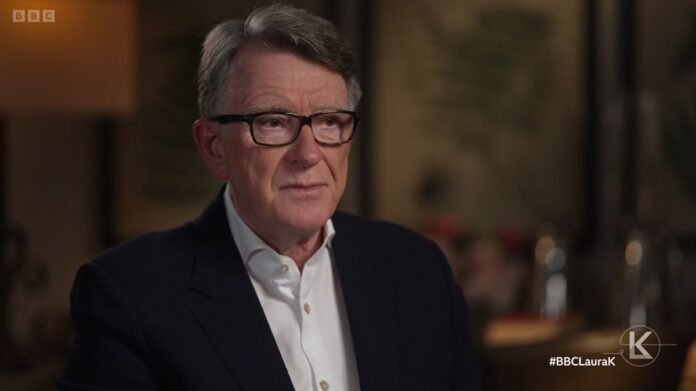

Lord Mandelson faces criticism for not apologizing to Jeffrey Epstein’s victims despite maintaining his friendship with the disgraced financier. The former US Ambassador, who was dismissed over leaked emails linking him to Epstein’s activities, defended his stance in a recent BBC interview. Mandelson asserted that he was unaware of Epstein’s criminal behavior and expressed regret for the lack of protection afforded to vulnerable women.
Despite calls for an apology, Mandelson emphasized that he was not directly involved in Epstein’s illicit activities and distanced himself from the darker aspects of their relationship. However, he acknowledged the systemic failure to support the victims and vowed to address the shortcomings in their protection.
Critics, including government minister Heidi Alexander, condemned Mandelson’s perceived lack of contrition, labeling his response as naive. Pressure mounts on the Labour Party to revoke Mandelson’s peerage, with SNP leader Stephen Flynn denouncing his association with Epstein. Efforts are underway to expel Mandelson from the House of Lords amid growing discontent within political circles.
The unfolding scandal surrounding Epstein has implicated several high-profile individuals, raising concerns about the extent of knowledge among his associates. Mandelson vehemently denies any complicity in Epstein’s heinous activities, citing a belief in the financier’s innocence despite his prior conviction. The controversy underscores the need for accountability and transparency in dealings with individuals of questionable character.
As the fallout continues, Mandelson’s reluctance to apologize and his perceived nonchalance towards Epstein’s crimes fuel public outrage and calls for decisive action. The saga serves as a stark reminder of the complex web of relationships and responsibilities that intertwine in the realm of high society and politics.