

In the latest episode of Quirks & Quarks with Bob McDonald, researchers have uncovered intriguing insights into the behavior of ancient sea monsters through an examination of fossilized vomit. The plesiosaur, a massive marine predator from the Jurassic era, had a diet that often led to them regurgitating shells on shore. By analyzing 150 million-year-old vomit samples from the North Sea, geologist Dirk Knaust from Equinor shed light on the dietary habits of these creatures.
Meanwhile, Nobel laureate Francis Halzen, a physicist at the University of Madison-Wisconsin, has been recognized for his groundbreaking work in neutrino research at the South Pole. His idea of creating a particle detector in ice led to the IceCube Neutrino Observatory, which has revolutionized our understanding of cosmic phenomena.
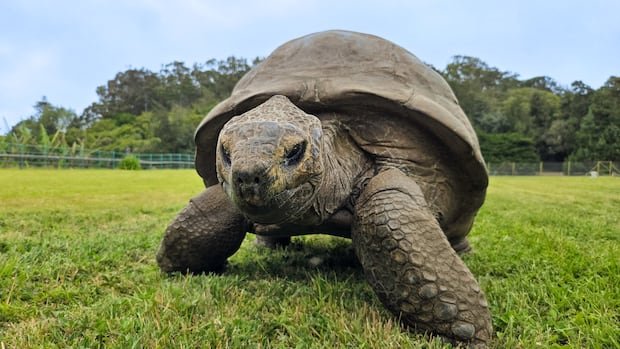
In another study, longevity researchers investigated the genetic secrets behind the remarkable lifespan of Jonathan, a 194-year-old Aldabra giant tortoise. Led by Dr. Stephen Clark from the nonprofit organization Kallel, the study revealed that Jonathan’s genome exhibited patterns similar to those of much younger tortoises, offering valuable insights into aging and longevity.
Furthermore, scientists have achieved a significant milestone in timekeeping by developing nuclear clocks, which promise unparalleled precision in measuring time compared to atomic clocks. This innovation, as explained by Thorsten Schumm from the Vienna University of Technology, opens up new possibilities for various scientific applications.
As wildfires become increasingly severe, researcher Crystal Kolden from the University of British Columbia-Okanagan is exploring nature-based solutions to mitigate the devastating impact of these natural disasters. Kolden’s work aims to address the escalating threat of wildfires encroaching on communities, offering hope for more effective wildfire management strategies in the future.