
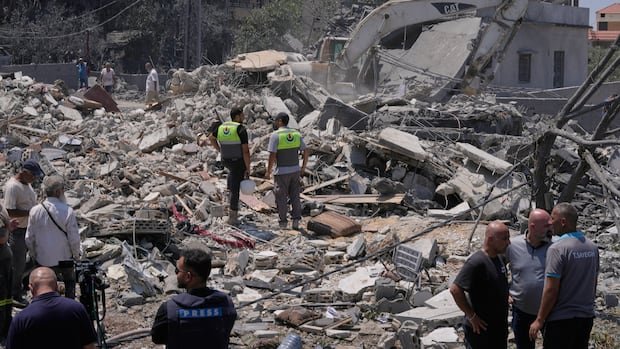

Israeli airstrikes in southern Lebanon resulted in the deaths of at least 11 individuals on Saturday, marking some of the most lethal attacks since the fragile truce between Israel and Hezbollah was implemented in June. The strikes, which targeted a home in the village of Ansar and the village of Deir al-Zahrani, left seven dead, including three children, and injured two in the former, while the latter saw four fatalities and 17 wounded.
A “framework agreement” was declared on June 26 by Israel and the Lebanese government, outlining a plan for Israeli forces to retreat from southern Lebanon in exchange for the disarmament of Hezbollah, a militant group backed by Iran. The agreement also envisions progress towards a potential peace treaty between the two countries, which technically remain in a state of war despite nearly eight decades passing since Israel’s establishment. Hezbollah has declined direct negotiations and was not involved in the agreement.
Israeli Prime Minister Nawaf Salam condemned the airstrikes, stating that they instill fear among residents and hinder efforts to maintain stability in the region. He emphasized that the victims of the attacks were not military targets and stressed the responsibility of the Lebanese state in addressing any military infrastructure within the country. Lebanese President Joseph Aoun expressed that the strikes were a clear message against ongoing negotiations and American-led initiatives to enforce the agreement.
Israeli airstrikes early on Saturday targeted the strategic Ali Taher hill, overlooking parts of Nabatiyeh, and surrounding roads, as reported by NNA. Despite the truce, Israel’s military has continued frequent assaults in the area, north of the Litani River, an informal boundary in Lebanon with significant portions under Israeli military control.
Hezbollah, in response to the attacks, urged the Lebanese government to halt the aggression instead of pursuing talks with Israel facilitated by the U.S., which they viewed as favorable to the enemy. They criticized the U.S. for being complicit in Israeli actions and warned that any Israeli aggression would be met with a suitable response. Earlier this month, two Israeli soldiers lost their lives in an explosion in southern Lebanon, marking the first Israeli casualties since the truce came into effect.
Lebanon and Israel have conducted seven rounds of discussions, with the most recent occurring in Rome. Hezbollah, backed by Iran, has resisted disarmament and accused the Lebanese government of making excessive concessions without ensuring an Israeli withdrawal. The latest conflict between Israel and Hezbollah erupted on March 2, following rocket strikes by Hezbollah in response to attacks on Iran by the U.S. and Israel. The Israeli strikes in Lebanon have claimed over 4,000 lives, including numerous civilians, while about 40 soldiers and three civilians on the Israeli side have lost their lives.