
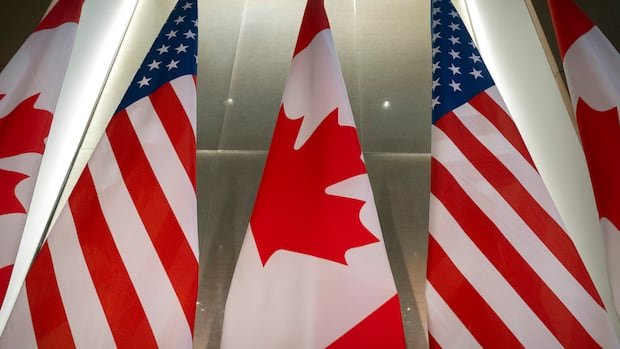

A legal challenge has been initiated against President Donald Trump’s tariffs on Canadian goods in the United States Court of International Trade. The lawsuit, filed by the non-profit organization Liberty Justice Center representing Gellert Global Group, a U.S. food importer, argues that Trump’s utilization of a trade statute from the 1930s exceeds his presidential authority.
Trump imposed a 50% tariff on various Canadian products using Section 338 after trade negotiations collapsed in August. Subsequently, this statute was also used to prohibit the import of additional Canadian items, such as motorcycles, alcohol, and dairy products.
The White House claims that Section 338 empowers the president to impose tariffs when a foreign country places U.S. exporters at a competitive disadvantage. However, the lawsuit contends that Canadian policies do not warrant the broad tariffs imposed by the Trump administration.
The legal action highlights that the tariffs have far-reaching implications on both importers and consumers in both countries due to the close historical relationship between the U.S. and Canada. While acknowledging tariffs as a signature policy of Trump, Liberty Justice Center CEO Sara Albrecht asserts that the implementation in this case is unconstitutional.
The Trump administration stands by its actions, emphasizing its commitment to supporting American workers, farmers, and businesses. Meanwhile, American companies like Gellert Global Group are feeling the impact of the trade war, disrupting established relationships and creating uncertainty throughout the supply chain.
The lawsuit not only raises concerns about the consequences of unchecked tariffs on U.S.-Canadian trade but also warns about the potential misuse of Section 338 by future presidents. It seeks to declare the tariffs unlawful and secure a refund for the affected parties.
The Liberty Justice Center has a history of challenging Trump’s tariff policies, previously contesting the use of the International Emergency Economic Powers Act of 1977. This legal battle resulted in a Supreme Court ruling that Trump’s use of the statute was unconstitutional, as Congress holds authority over tax and tariff matters.