

Montreal police have been expanding their arsenal of AI-driven technologies to monitor vehicles and individuals throughout the city, sparking concerns about transparency and privacy rights among the public.
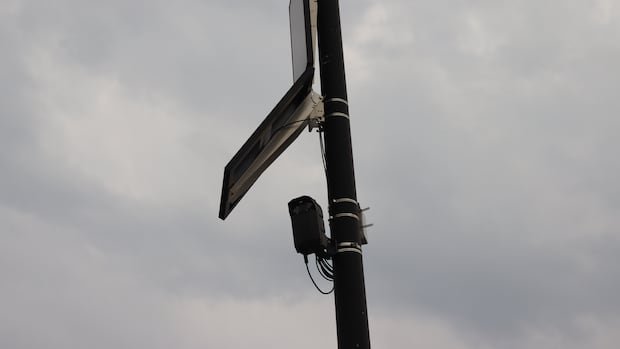
A state-of-the-art camera capable of scanning and recognizing vehicles was recently sighted by a Radio-Canada journalist on a lamppost along Henri-Bourassa Boulevard in Montreal’s Rivière-des-Prairies neighborhood. Following Radio-Canada’s coverage of the camera, it was promptly removed on Wednesday.
The camera identified as a Cloudrunner CR-H2, produced by Genetec, a Montreal-based company, was confirmed by the Service de police de la Ville de Montréal (SPVM). This system, akin to the contentious Flock Safety cameras widely utilized in the United States, not only reads license plates but also records specific vehicle attributes such as color, make, and model, according to the manufacturer’s website.
Unlike Flock cameras, which share data in a central database accessible to various police forces, Genetec’s system maintains collected information under the control of its designated operator. The SPVM spokesperson, Marc-Antoine Bélanger, assured that access to the captured images is restricted to the investigators managing the targeted operations.
The SPVM emphasized the importance of keeping their technological tools undisclosed to safeguard ongoing investigative strategies. However, privacy advocates criticized the lack of transparency regarding the implementation of new technologies and stressed the necessity of public awareness without compromising police operations.
The deployment of Cloudrunner cameras forms part of the SPVM’s broader integration of AI-powered technologies, including the iMotion ROC AI software developed by Rank One Computing. While the software aids investigators in sorting through vast video data, the SPVM denied using its facial recognition or biometric functionalities, emphasizing its application for identifying specific elements within videos.
An internal privacy impact assessment by the SPVM recognized the potential civil liberties risks associated with the technology, emphasizing the need for vigilance to prevent unwarranted investigations and discrimination based on visible characteristics. Further, the assessment underlined the software’s configuration to search for objects rather than individual traits to minimize discriminatory outcomes.
Public records revealed Montreal’s procurement of four Cloudrunner units from Genetec last October, with plans for potential expansion based on investigative requirements targeting armed violence, vehicle theft, and crimes against merchants. Genetec’s vice-president, Andrew Elvish, highlighted the technology’s privacy-respecting design and emphasized the detailed logging of data interactions to uphold accountability.
In response to inquiries, a City of Montreal spokesperson clarified that they had not installed the Cloudrunner camera and directed deployment-related queries to the SPVM. The growing use of surveillance technologies by law enforcement agencies underscores the ongoing debate over privacy, public safety, and the balance between security measures and individual liberties.