
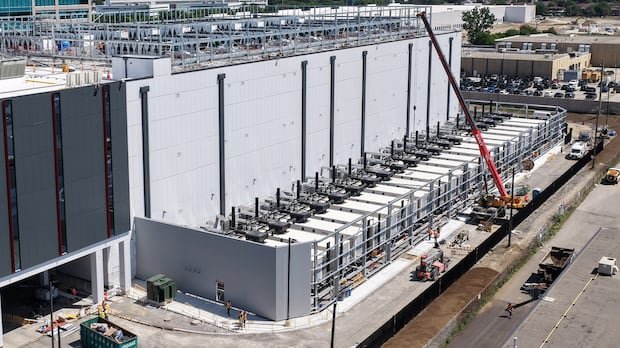

Ontario Premier Doug Ford unveiled the province’s new strategy for data centers, emphasizing the importance of keeping Canadians’ data within the country. The plan is built on three core principles: fostering economic growth, safeguarding data, and ensuring community investment and public trust.
Ford highlighted that the new playbook aims to drive future economic prosperity, boost tax revenues, and generate job opportunities while ensuring data centers adhere to regulations. A key aspect of the framework is making data centers responsible for covering their electricity costs, encouraging them to develop their power sources and establishing a distinct rate category for large new data centers.
The province clarified that it will not provide financial incentives to attract investments, emphasizing that the framework will be a pivotal element of its artificial intelligence (AI) strategy. This strategy is projected to bring substantial economic growth by 2035, along with creating thousands of jobs annually.
As debates on data center moratoriums unfold in various municipalities across Ontario, with Oakville recently enacting a one-year halt and Mississauga set to vote on a similar measure in September, the province’s new framework aims to address concerns while supporting AI advancements.
Green Party leader Mike Schreiner recently advocated for a pause on data centers, emphasizing the need for stronger regulations to protect local communities. Concerns have been raised about water usage and environmental impacts associated with data center infrastructure, prompting calls for the adoption of closed-loop systems to reduce water consumption.
While Ford stressed the importance of data centers for technological advancement, Schreiner and the Ontario Greens are pushing for more stringent regulations to ensure community well-being and control over data center developments. The debate continues as Ontario navigates the complex landscape of data center expansion and regulation.