
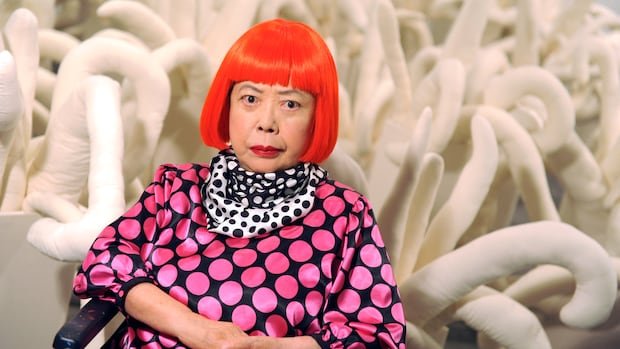

Renowned artist Yayoi Kusama captivated audiences worldwide with her distinctive artistic vision, often characterized by saturating her artworks, sculptures, and museum displays with an endless array of her iconic polka dots. Kusama, a revered contemporary artist from Japan who passed away at the age of 97 in a Tokyo hospital, gained international acclaim with exhibitions in prestigious venues such as the Museum of Modern Art and the Whitney Museum in New York, as well as the Museum Ludwig in Germany.
One of her most renowned creations, the Infinity Mirror Rooms installations, drew massive crowds at various museums, including Toronto’s Art Gallery of Ontario during the Yayoi Kusama: Infinity Mirrors exhibition in 2018. The exhibition’s success led the gallery to acquire, with crowdfunding assistance, the permanent installation known as Infinity Mirrored Room — Let’s Survive Forever.
Known for her distinctive orange bob wig, Kusama’s artworks are instantly recognizable, featuring repetitive psychedelic motifs like vibrant swirls, nets, and most notably, polka dots, glittering spheres, or light dots.
Throughout her career, Kusama faced mental health struggles and societal rejection in Japan for her avant-garde style. Despite these challenges, her art, which includes installations with phallic fabric sculptures and provocative performance pieces, sparked public dialogue and solidified her status in the art world.
Born in 1929 in Matsumoto, Japan, Kusama relocated to the United States in 1957. In the late ’60s, she staged unconventional antiwar performances in New York City, where she painted circles on individuals, even on a horse, leading to both media attention and legal repercussions for obscenity.
Expressing her unwavering dedication to her craft, Kusama once stated in a 2012 interview with The Associated Press, “I want to create a thousand paintings, maybe two thousand paintings, as many as I can draw. I will keep painting until I die.”
As her fame expanded, Kusama collaborated with fashion brands like Louis Vuitton in 2012, creating licensed products featuring her distinctive illustrations on various items such as teacups, keychains, and T-shirts.
Beyond her achievements in visual arts, Kusama delved into filmmaking and writing, publishing several novels. Reflecting on her creative process, she remarked, “I think, ‘Oh I drew that? I was thinking that.'”
Kusama’s legacy endures through her groundbreaking contributions to the art world, leaving an indelible mark on contemporary art and inspiring generations of artists.