
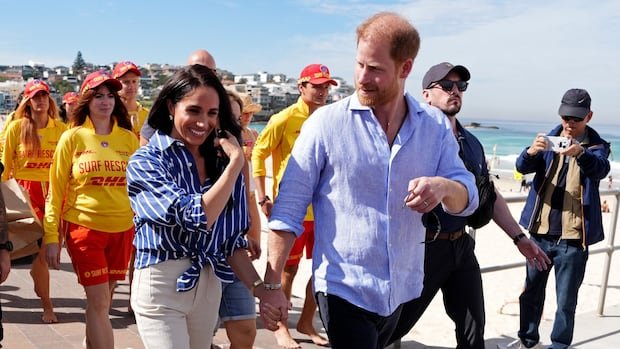

When Prince Harry and Meghan Markle come back to the UK this month, they will be re-entering a country that has been discussing them from a distance for six years. Their children, Prince Archie and Princess Lilibet, are set to start school in the UK in September, and the couple is expected to reside privately outside of London for an extended period. They will continue to be non-working members of the royal family.
There are already many questions surrounding the couple’s return. After spending years away due to a strained relationship with the British media, which played a role in their move to California, could the intense interest from tabloids diminish this time?
Speculations about the future plans and whereabouts of Royals are common in Britain. Steven Barnett, a communications professor at the University of Westminster, noted the polarized coverage of Harry and Meghan in the British press, with some outlets engaging in personal attacks and sensationalism.
Initial media coverage included headlines like the Daily Mail’s reference to Meghan’s mother as “(almost) straight outta Compton” and The Sun’s report on “Harry’s girl on Pornhub,” which later led to an apology from the tabloid. Research by The Guardian revealed significantly more negative coverage of Meghan compared to Kate Middleton in British newspapers.
Royal commentator Afua Hagan anticipates increased interest in the UK upon the couple’s return. She mentioned that while Harry and Meghan will face scrutiny, they are better equipped to handle it this time.
According to Barnett, the British public’s focus may have shifted to other ongoing events, unlike when Harry and Meghan initially lived in the UK. Despite various challenges facing the country, including social and political issues, the attention on the couple may persist.
A recent legal setback for Prince Harry in a privacy lawsuit against the Daily Mail could lead to further negative media coverage, as per Barnett’s assessment.
The return of Harry and Meghan coincides with a period of reflection for the British media following the tragic death of Jason Arday, a Cambridge professor. His case sparked discussions on media scrutiny, diversity, and the treatment of public figures, drawing parallels to the coverage of Meghan.
Marcus Ryder highlighted the lack of diversity in British media as a contributing factor to the disproportionate scrutiny faced by Black individuals like Arday and Meghan. He emphasized the need for fair treatment based on individual merit, irrespective of race.
Arday’s story raised larger questions about race, diversity, and elitism in British institutions. Ryder connected this narrative to Meghan’s experience, illustrating contradictions within British society.
As Harry and Meghan transition into their new roles as non-working royals, having resided in California for six years, much of the controversy surrounding their departure has been extensively covered. Ryder expressed hope that media coverage would reflect the positive sentiments towards Meghan, particularly from Black women.
Overall, as the couple returns to the UK, they face a media landscape that is evolving, with ongoing discussions about privacy, diversity, and the treatment of public figures dominating the headlines.