

A blizzard is expected to bring significant snowfall of up to 85cm as the Met Office warns of a higher likelihood of colder weather and wintry conditions.
Following a frosty start to January with Storm Goretti, Brits are bracing for continued wintry weather in the upcoming weeks. Weather patterns indicate the convergence of low-pressure systems from the Atlantic with cold Arctic air, resulting in snowfall.
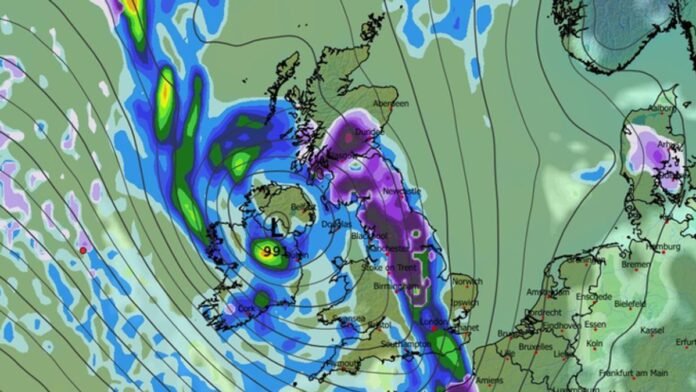
Early February forecasts show a low-pressure system settling over Ireland, poised to blanket the UK with heavy snow as it sweeps across the region. Scotland is anticipated to bear the brunt of the snowstorm, with depths reaching up to 85cm, while southern coastal areas can also expect flurries.
By 6pm on February 1, weather maps portray intense snow clouds over northern England and Scotland, shifting slightly eastward by 9pm but lingering over central Scotland.
Temperatures are set to plummet significantly, with central Scotland bracing for a bone-chilling -11°C and south Wales expected to drop to -10°C by midday on February 2, as indicated on the temperature map.
The Met Office emphasizes a growing likelihood of plummeting temperatures following an initial drop in the North East.
For the period spanning January 23 to February 1, the UK is expected to witness a clash between Atlantic weather systems advancing from the west and colder, drier conditions influenced by high pressure from the east. Initially, milder Atlantic air will prevail for most regions with occasional showers or prolonged rain.
As the period progresses, there is a heightened potential for a widespread shift towards colder and drier conditions, increasing the chances of snowfall across the country.
Looking ahead to February 2-16, the Met Office anticipates further cold weather and wintry conditions. Weather patterns are likely to evolve slowly near the UK, with low pressure situated to the west or southwest and high pressure to the northeast, raising the probability of cold spells and wintry hazards.
While forecasts remain uncertain, later into February could see a transition to more unsettled weather conditions and a return to temperatures closer to the seasonal average.