
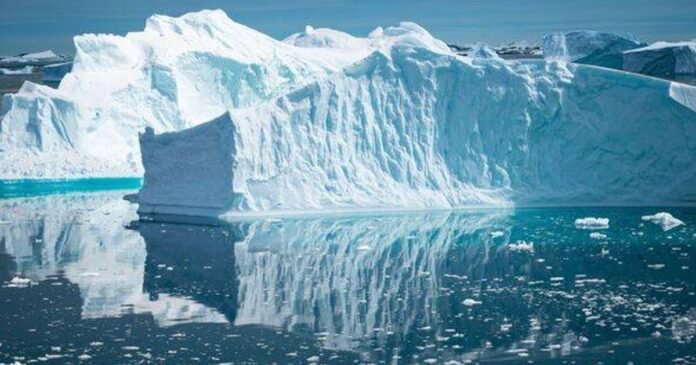

Antarctica, a mysterious and captivating destination, has long attracted adventurers, explorers, and scientists seeking to unravel its secrets. Yearly expeditions to this icy realm aim to comprehend its changes and the implications for the global environment.
The urgency of these missions has heightened due to climate change, global warming, and rising sea levels, which are gradually wearing away the southern ice cap. Despite the risks involved, researchers venture into this vast frozen landscape in pursuit of knowledge.
In a notable incident earlier in the decade, a submarine named Ran, operated by Professor Anna Wahlin from the University of Gothenburg, disappeared while exploring Antarctica’s Dotson Ice Shelf. Professor Wahlin’s research focused on the erosion of ice shelves due to ocean currents melting them from below.
During a 2022 mission lasting 27 days under the Dotson Ice Shelf, Ran aimed to investigate the differential melting rates of its eastern and western sides. The submarine’s findings unveiled various ice formations resulting from basal melt, where the ice melts from beneath the surface.
Despite completing 14 successful missions under the ice that year, Ran failed to resurface during a subsequent dive. Efforts to locate the submarine were unsuccessful, leaving the research team puzzled about its fate, whether due to mechanical failure or an impact.
Although Ran was lost during the expedition, its data provided valuable insights into the ice-ocean dynamics of the region. Researchers are not only focused on the Dotson Ice Shelf but also on the Antarctic Circumpolar Current (ACC), which is weakening in velocity and strength, as indicated by research from the University of Bonn.
Concerns have been raised about the potential global ramifications of the ACC’s weakening, with warnings from experts like Dr. Bishakhdatta Gayen from the University of Melbourne. Dr. Gayen emphasized the critical role of the ACC in shaping weather patterns and climate systems globally and highlighted the dangers of its breakdown, including increased climate variability and accelerated global warming.