
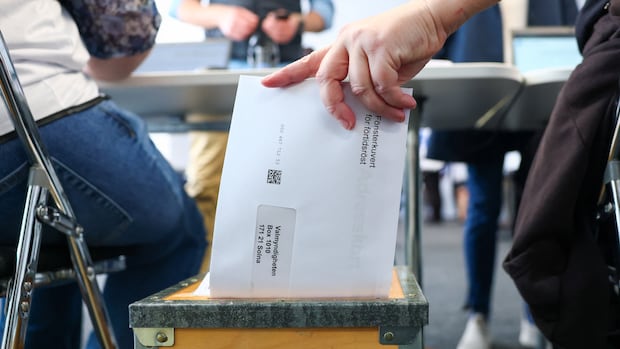

On Sunday, voters in Sweden participated in a tightly contested election that could either see a far-right party enter the government for the first time or steer the nation back toward its historically liberal roots.
According to multiple opinion polls released this week, the centre-left opposition was slightly ahead of the ruling right-leaning coalition ahead of the parliamentary election.
Despite trailing in polls during his four-year tenure, Prime Minister Ulf Kristersson has been gaining momentum in the closing weeks of the campaign, while his rival, Magdalena Andersson of the Social Democrats, has been losing support.
Kristersson has committed to including the far-right Sweden Democrats in the government if his coalition wins.
Proponents of the right-wing coalition argue that their policies have effectively reduced gang violence and significantly decreased immigration, asserting that a victory would validate this approach and pave the way for more of the same in the future.
“We can bring together parties, voters, and issues into collective action. That’s how we achieve results,” Kristersson stated to reporters in parliament this week.
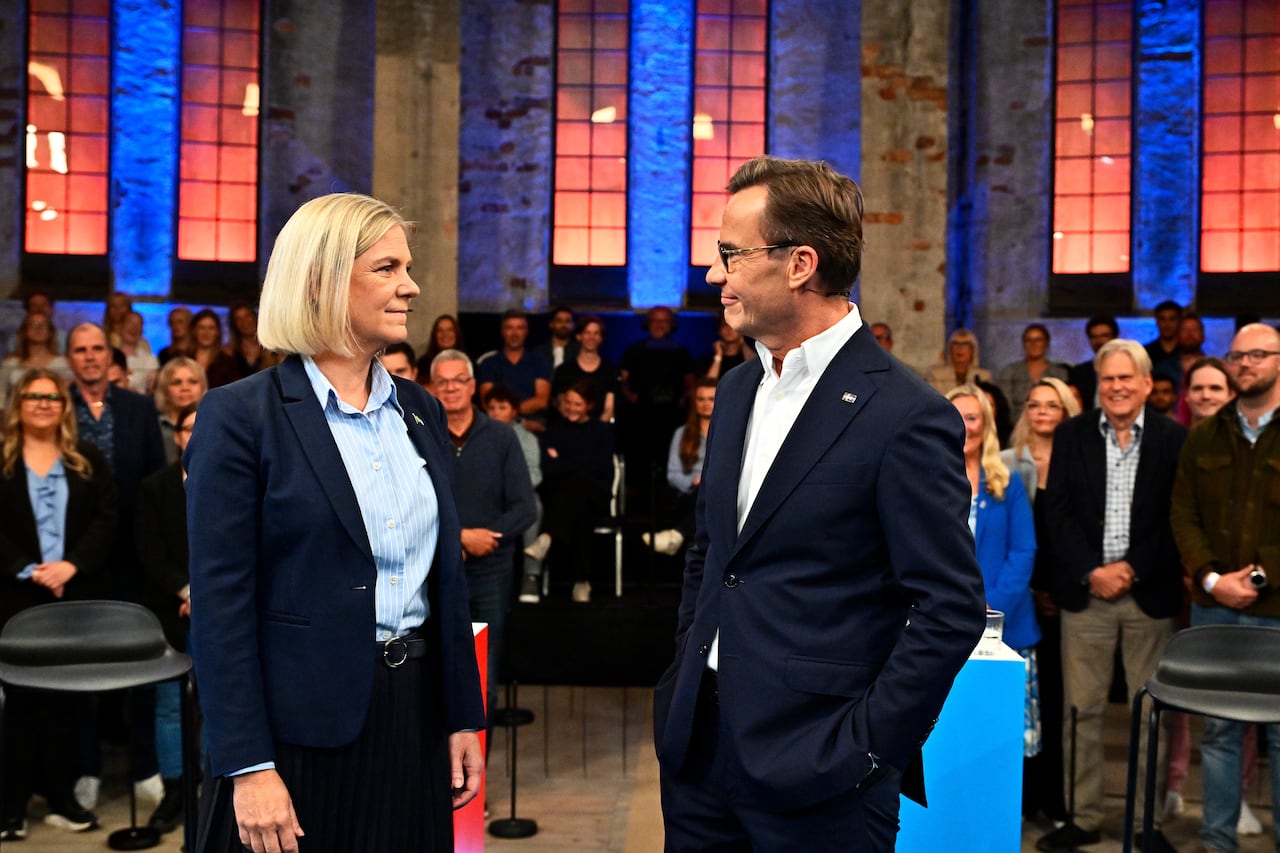
Magdalena Andersson of the centre-left Social Democrats, left, and Ulf Kristersson of Sweden’s ruling right-wing bloc are seen before a televised debate in Gavle on Wednesday. (Anders Wiklund /TT News Agency/The Associated Press)
Opponents argue that the current agenda is infringing on civil liberties and pressuring immigrants to more closely align with Swedish cultural standards or face expulsion, using both incentives and penalties.
“We have become a tougher society, a quieter society, but also a poorer one, as our growth has lagged significantly behind our potential, leading households to find their incomes purchasing less and less,” Andersson told Reuters.
“Our nation’s strength has been rooted in sharing in each other’s successes and standing together during difficult times.”
Polling stations opened at 8 a.m. local time in the EU member nation of 10 million people, which joined NATO following Russia’s full-scale invasion of Ukraine, with exit polls expected shortly and preliminary results anticipated around 2 p.m. ET.
Johanna Tornqvist, a 44-year-old market analyst, mentioned that she voted for the right-wing coalition, downplaying fears surrounding the Sweden Democrats’ potential inclusion in the government as overstated.
“The key factor is to prevent the red-green coalition from taking power,” she stated.
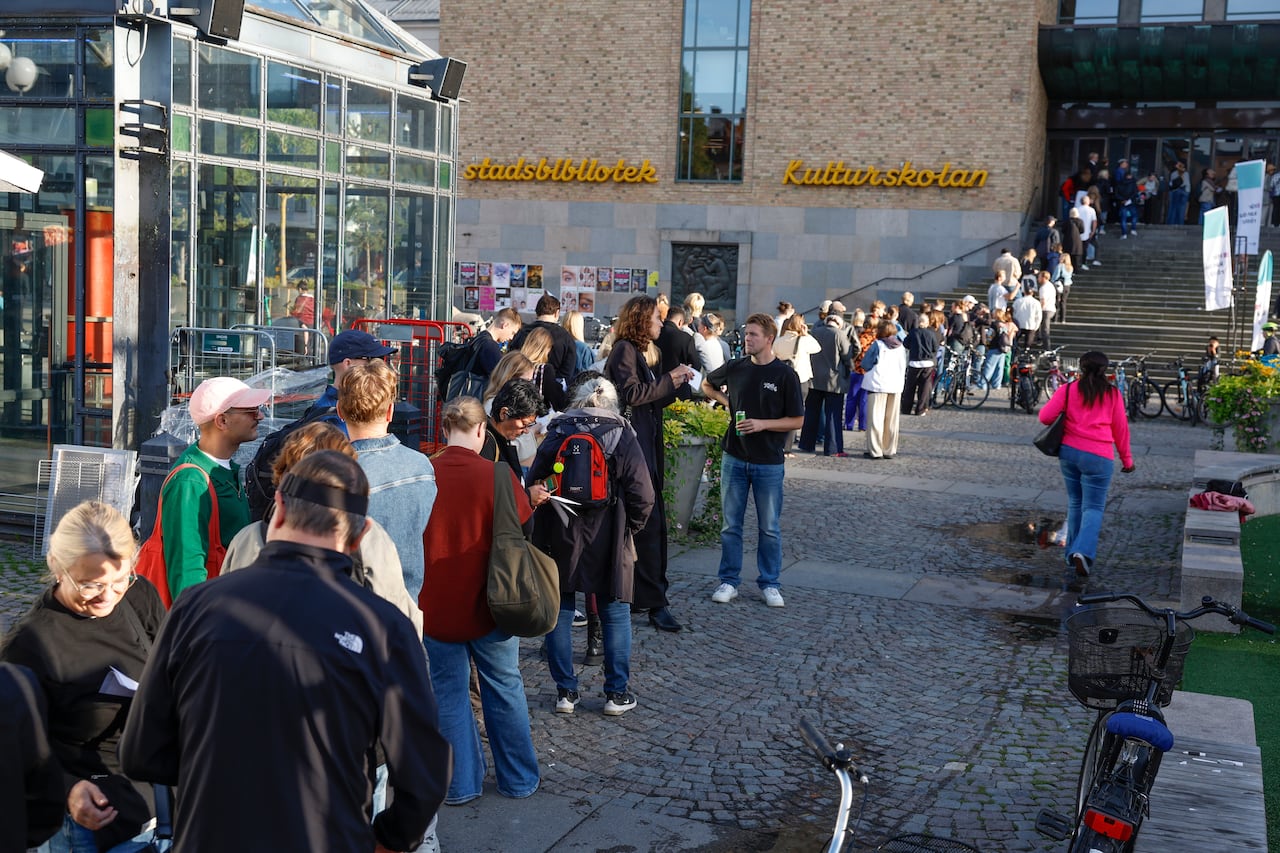
People line up outside a polling station in Stockholm on Friday. (Nicklas Thegerström/TT News Agency/The Associated Press)
In contrast, Susanne Cherment, a 20-year-old first-time voter at a polling station in Nacka, east of Stockholm, expressed discomfort with the rhetoric of the Sweden Democrats.
“It’s alarming how many young individuals are attracted to the far right,” she remarked.
If the Sweden Democrats achieve electoral success, it would likely be seen as a positive development by the growing far-right parties across Europe, which recently gained momentum from the anti-immigrant Alternative for Germany‘s victory in a state election in Germany.
Another country
In Rinkeby, a region in northern Stockholm classified by police as severely socioeconomically disadvantaged, voters voiced concerns about their future.
“They target Muslims and specifically single out Muslims and immigrants. However, immigrants make valuable contributions to society,” remarked Kahin Ahmed, 57, a sociologist who arrived in Sweden as a Somali refugee.
“A quarter of those employed in the healthcare sector are immigrants. If immigrants didn’t come to work for even one day, Sweden would come to a standstill,” he added.
During the past four years, the ruling minority coalition, supported by the Sweden Democrats, has eliminated permanent residency for refugees, tightened welfare regulations, and increased deportations of individuals lacking the right to remain in the country.
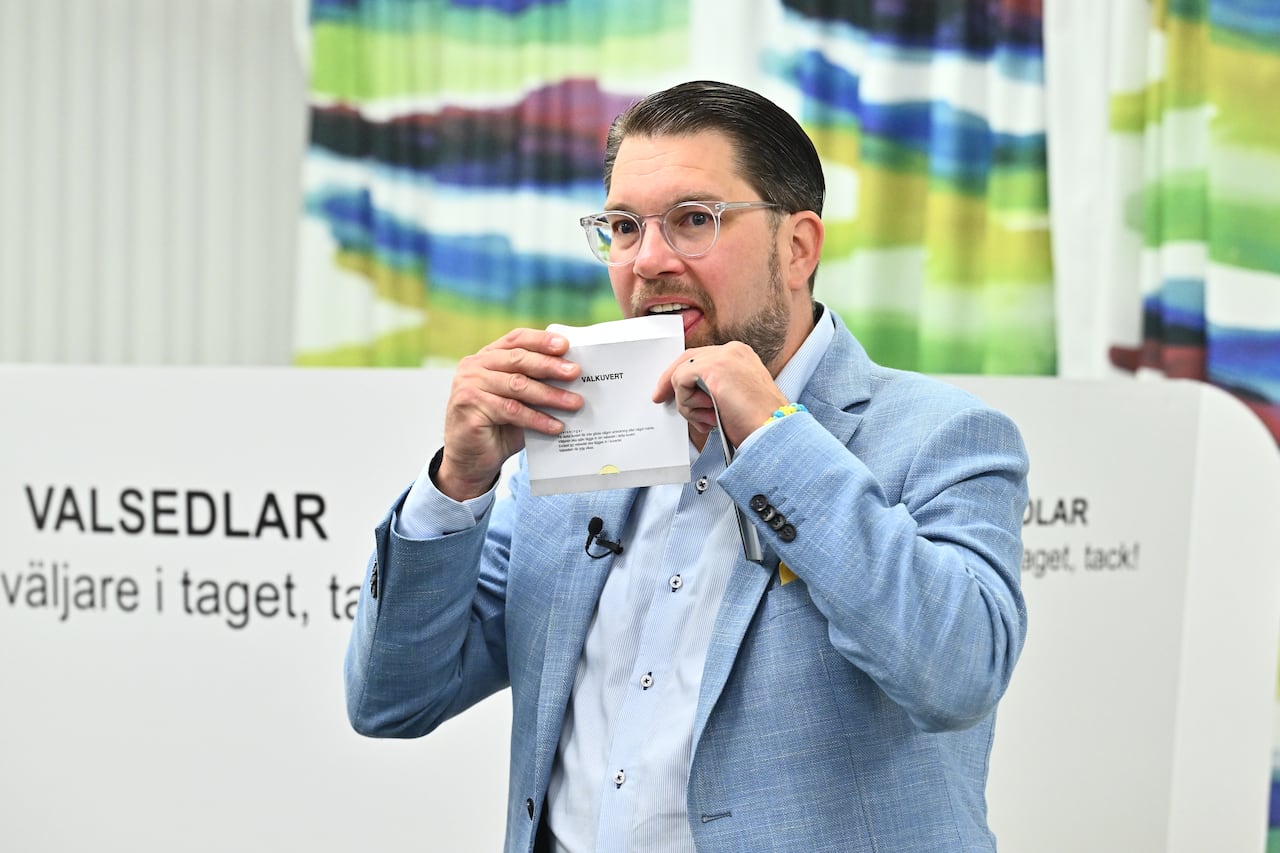
Leader of the Sweden Democrats party Jimmie Åkesson votes in Rinkeby, a suburb of Stockholm, on Saturday, a day prior to the general election in Sweden. (Claudio Bresciani/TT News Agency/The Associated Press)
While casting his vote in Rinkeby, Sweden Democrats leader Jimmie Åkesson stated that the suburb, which has one of Sweden’s largest Swedish-Somali communities, “does not resemble Sweden.”
The Sweden Democrats have committed to prohibiting both the niqab and the burqa if they enter the government. Åkesson declared to Reuters that such attire “represents values that I believe are not suited for Sweden.”
Building a government
If they succeed, the right-wing parties have already agreed to establish a four-party government led by Kristersson, while Andersson’s route to power remains less clear.
Despite support from celebrities like ABBA’s Benny Andersson, who altered the lyrics of Mamma Mia to include “Magdalena” during a performance at a rally this week, the Social Democrats have been losing traction in polls.
The outcome of the election may hinge on whether the Liberals can surpass the four percent threshold required to secure seats in parliament, enhancing a right-wing coalition that includes the Moderates, Christian Democrats, and, since Kristersson’s invitation earlier this year, the Sweden Democrats.
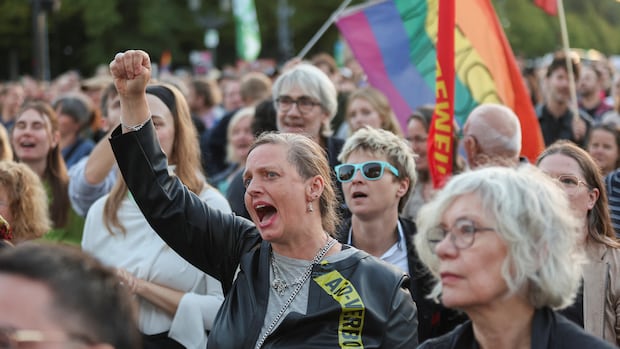
A day after the far-right Alternative for Germany’s (AfD) victory in the state of Saxony-Anhalt, thousands protested in Berlin over the party’s stance on LGBTQ rights and immigration. Meanwhile, AfD leaders celebrated the win, saying ‘Germany is back.’
The Sweden Democrats have already spent four years supporting Kristersson’s minority government in parliament, gaining credibility with the wider right-wing coalition.
At the same time, the opposing blocs have aligned on several voter priorities, such as backing Ukraine, military rearmament, and providing relief to families affected by the rising cost of living.
While the opposition parties, including the Social Democrats, Greens, Left Party, and Centre Party, generally agree on the necessity for increased welfare and public expenditure, they still diverge on various issues, particularly immigration, where Andersson’s party advocates for a stricter stance compared to some of its potential allies.
They also disagree on topics such as a tax on billionaires and the construction of new nuclear reactors, with the Centre refusing to support a government involving the Left Party, complicating Andersson’s efforts to assemble a cabinet.