
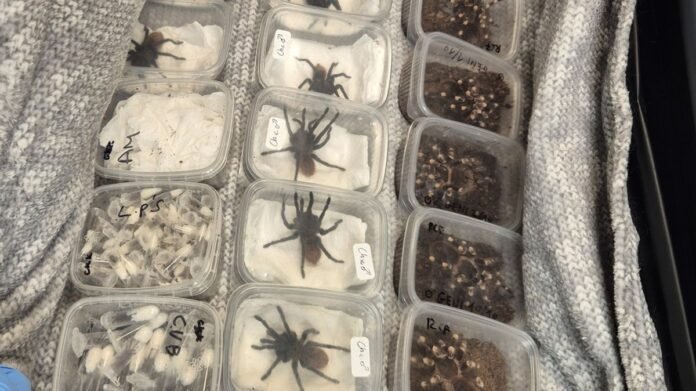

Smuggling gangs have been caught transporting tarantulas, live snakes, and lovebirds in vehicles, as revealed by recent crackdowns. The UK’s Border Force intercepted over 250 species of endangered wildlife products at various entry points such as airports, ports, and mail depots within a month. Notably, the seizures included 2,000 live tarantulas valued at around £70,000.
During operations in September and October, law enforcement discovered two rainbow boa constrictors hidden under blankets in a car in Dover. Additionally, more than 100 birds, including scarlet ibis, green-cheeked conures, and lovebirds, were found crammed into a vehicle, with some already deceased and the rest in poor condition.
The incidence of wildlife smuggling has risen by 73% over the past two years, prompting Home Office Minister Mike Tapp to emphasize the seriousness of this organized crime. Tapp stated that wildlife smuggling fuels corruption, contributes to species extinction, and poses a threat to border security.
The government highlighted a significant increase in spider trafficking, with tarantulas fetching prices ranging from £50 to £500 on the black market. Seized items also included wildlife products like an elephant hair ring from the United States, king cobra balm from Thailand, and a blacktip shark jaw from Australia.
Defra Minister Mary Creagh condemned the illegal wildlife trade, describing it as detrimental to the natural environment. The recent seizures were part of Operation Thunder, a collaborative effort led by Interpol and the World Customs Organization to combat illegal wildlife trafficking globally.
Law enforcement authorities, with the support of the police, conducted inspections nationwide during the operation. Items such as shark and crocodile meat, ivory carvings, and a tiger claw bottle were confiscated from sellers who failed to provide proper documentation.
Wildlife crime is a lucrative industry, estimated to be worth up to £17 billion annually worldwide, making it the fourth largest international crime after firearms, drugs, and human trafficking. Efforts to combat this illegal trade are increasingly intelligence-led, with international cooperation playing a crucial role in disrupting trafficking networks.
The intercepted wildlife products are protected under the Convention on International Trade in Endangered Species (CITES), which is celebrating its 50th year. Authorities aim to rehome or utilize seized items for research purposes whenever feasible.