
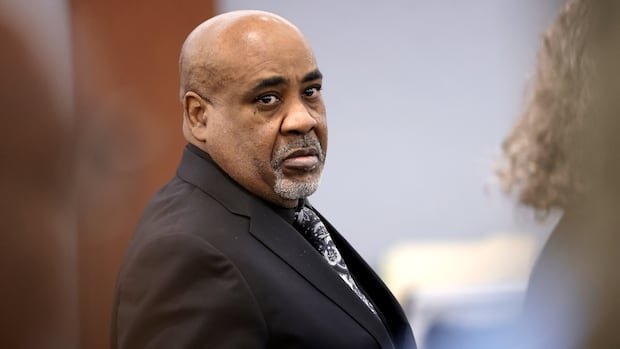

A jury has rendered a guilty verdict for Duane “Keffe D” Davis in connection with the 1996 assassination of rap legend Tupac Shakur, marking a significant development in a longstanding case that has captivated hip-hop enthusiasts for years. Davis, aged 63, was found guilty on Monday of murder with a deadly weapon and faces a potential life sentence. The verdict came after three hours of jury deliberation following a lengthy trial in Las Vegas.
Upon hearing the verdict, Shakur’s sister, Sekyiwa “Set” Shakur, was visibly emotional, while Davis’s son covered his face in the courtroom. Chief Deputy District Attorney Binu Palal asserted in closing arguments that Davis armed himself and pursued Shakur and Death Row Records co-founder Marion “Suge” Knight following an earlier altercation where Davis’s nephew was assaulted.
Palal acknowledged discrepancies in Davis’s various accounts of the incident over the years but contended that the consistent detail across his narratives was his presence inside a white Cadillac from which the fatal shots were fired. Davis’s defense attorney, Michael Sanft, challenged the lack of concrete evidence tying Davis to the scene, emphasizing the absence of surveillance footage or phone records placing Davis in Las Vegas on the night of the shooting.
The case, which has attracted widespread attention from hip-hop enthusiasts and legal experts, revolves around the fatal encounter that occurred on September 7, 1996, when Shakur was shot in Las Vegas while stopped at a red light. Davis publicly admitted to being in the Cadillac and providing the weapon to individuals in the vehicle’s backseat, framing the shooting as retribution for an earlier altercation involving his nephew and Shakur’s entourage.
Under Nevada law, individuals assisting in a murder can be held liable for the crime. Davis is the sole surviving member among the four individuals prosecutors claim were present in the Cadillac during the shooting. Palal underscored to jurors that corroborating evidence was not imperative if they found Davis’s statements credible.
While the prosecution did not argue that Davis directly fired the shots, they asserted that his role in providing the gun and orchestrating the attack rendered him criminally liable. Palal maintained that the shooting was premeditated, citing testimonies and accounts indicating a calculated pursuit of Shakur before the incident.
Addressing Davis’s public statements and memoir during the trial, Palal highlighted inconsistencies and asserted that Davis was profiting from a murder by manipulating the narrative. On the other hand, Sanft contended that Davis’s memoir contained altered details and that the prosecution’s case lacked substantial evidence. In a dramatic moment during the trial, Davis’s scrapbook containing articles about Shakur was presented as evidence by the prosecution to underscore his alleged involvement in the crime.