
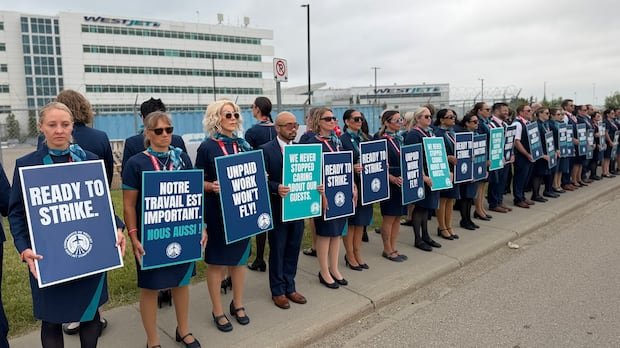

WestJet, the second-largest airline in Canada, is making preparations for a potential shutdown ahead of a strike or lockout involving its flight attendants. However, the implementation of a gradual wind-down plan does not signify an inevitable labor dispute, as negotiations between the union and the airline are ongoing.
In a communication obtained by CBC News, WestJet’s vice-president of inflight operations, Robert Antoniuk, emphasized that the agreement reached with the union does not signal an escalation towards labor action. The agreement outlines the procedures for winding down operations if negotiations fail between CUPE WestJet Component and the company.
According to CUPE representatives, the union’s primary aim is to secure a fair deal without resorting to a strike. Federal mediators are actively involved in the negotiations, with Transport Minister Steven MacKinnon expressing optimism about reaching a mutually agreed-upon resolution.
John Gradek, a supply networks and aviation management expert at McGill University and former Air Canada director, highlighted the necessity for airlines like WestJet to have contingency plans in place to prevent disruptions in case of a labor dispute. He explained that pre-positioning is crucial to ensure that aircraft and crew members are not stranded abroad in the event of a shutdown.
While WestJet has not announced any flight cancellations related to the potential labor dispute, the airline has offered to waive cancellation or change fees for passengers traveling between July 30 and August 4. Nearly 97% of eligible flight attendants have voted in favor of a strike, with a potential strike date of August 2 looming if an agreement is not reached.
One of the key issues in the negotiations is the compensation structure for flight attendants, particularly regarding unpaid hours worked. The union contends that flight attendants are not adequately compensated for all hours worked, leading to tensions between the two sides.
WestJet’s current pay system for flight attendants is based on “credit hours,” which may not fully account for all duties performed. While the airline asserts that flight attendants are compensated for all hours worked under the current contract, the union argues that unpaid work remains a significant concern.
The unresolved issue of unpaid work has been a longstanding point of contention between WestJet and its flight attendants, mirroring similar disputes in the airline industry. In the event of a labor dispute, both the company and the union are required to provide 72 hours’ notice before any strike or lockout actions can be taken. This situation underscores the potential impact on passengers and operations should a strike or lockout occur.