
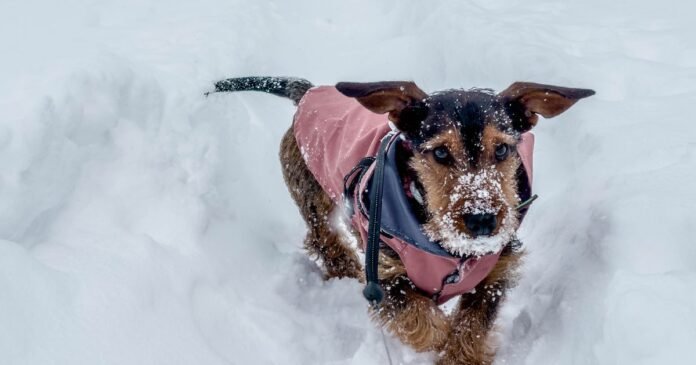

A veterinary technician has highlighted essential signs to monitor in dogs during the winter season. Recent snowfall across the country has led to uncertainty among dog owners regarding safe outdoor walks for their pets.
Dogs have become integral members of millions of households worldwide, often considered cherished companions. Pet ownership entails a significant commitment, including ensuring their well-being and happiness.
In a video shared on YouTube, licensed veterinary technician Jill outlined key indicators for dog owners to observe when taking their pets out in snowy conditions. Factors like breed, size, and fur type play a crucial role in determining a dog’s ability to withstand cold weather.
Dogs with thicker coats and high energy levels are better suited for colder climates compared to smaller, short-haired breeds not well-adapted to snow. Owners should also assess their dog’s ability to communicate discomfort in cold temperatures.
Frostbite is a serious concern for dogs exposed to extreme cold and is considered an emergency condition. Signs of frostbite may include changes in skin color and rapid loss of body heat, necessitating immediate warming and potential veterinary attention.
Jill emphasized the importance of providing dogs with fresh water, warm bedding, nutritious food, and regular activity during cold weather. Monitoring dogs for signs of discomfort, such as redness in their feet or a runny nose, is crucial to prevent frostbite or hypothermia.
To prevent frostbite, limit outdoor time for dogs in frigid conditions and ensure they have adequate protection like sweaters or booties. Additionally, using pet-safe ice melting products is essential to prevent potential toxicity if ingested by dogs.
If concerned about a dog’s well-being in cold weather, seek guidance from a veterinary professional to ensure their safety and comfort.