
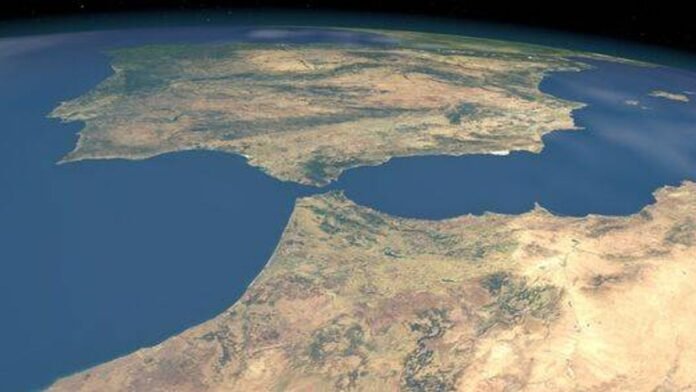

A massive subaquatic passage connecting Europe and Africa may soon become a reality following a significant advancement in the project. The ambitious plan to construct a tunnel under the Strait of Gibraltar has been revitalized by Spain, with scientists confirming the technical feasibility of such a remarkable engineering endeavor.
In October, a study conducted by German tunnel experts Herrenknecht, commissioned by the Spanish Government, determined that drilling a railway tunnel beneath the strait could be achieved using existing technology. Subsequently, Spanish consultancy firm Ineco has been assigned to develop a project blueprint by the end of the upcoming year, aiming for potential government approval as early as 2027.
The idea of establishing a man-made connection between Europe and Africa was first proposed in the 1970s but remained dormant until now. The envisioned tunnel, designed to traverse the nine-mile stretch of water between southern Spain and Morocco, draws inspiration from the successful Eurotunnel that links Britain and France under the English Channel.
The latest estimated cost of the project stands at €8.5 billion (£7.4 billion). The tunnel, comprising two separate railway passages accommodating trains in both directions, is slated to link Punta Paloma in Cadiz to Cape Malabata near Tangier, covering approximately 26 miles, with nearly 17 miles underwater. Projected to reach a depth of 1,540 feet, it will offer a 30-minute train journey for both passengers and freight upon completion.
However, the project faces significant challenges due to its location at the intersection of the Eurasian and African tectonic plates along the Azores-Gibraltar fault line. Fieldwork is expected to begin in 2030, with the primary construction phase scheduled between 2035 and 2040, though these timelines are subject to change.
Originally targeting completion by 2030, aligning with the FIFA World Cup co-hosted by Spain, Portugal, and Morocco, experts now acknowledge the complexity of the project and the preliminary study stage, deeming the initial timeline unrealistic.
The proposed route from Punta Paloma to Cape Malabata signifies the culmination of years of discarded proposals, such as an early suspension bridge concept, which was dismissed due to the strait’s depth, seismic activity, and harsh weather conditions. SECEGSA and SNED are jointly overseeing the project to establish a reliable rail link between Europe and North Africa.