
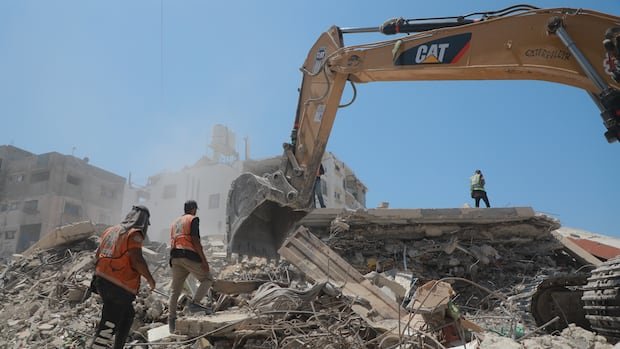

In Gaza City, members of the Al-Drimli family are laboriously searching through the debris of their former home to locate the remains of a friend and neighbor. Armed only with shovels, buckets, a wheelbarrow, and their bare hands, they toil under the scorching midday sun. The men work quietly, shielded by orange towels or hooded sweatshirts, as the clatter of shovels against rubble and the hum of an electric saw resonate in the air.
Using basic tools, they fill a dusty wheelbarrow with rubble and transport it to a nearby pile, attempting to clear the vast amount of wreckage left behind by a six-storey residential building struck by an airstrike in November 2023. The family had already recovered the remains of their own loved ones and is now focused on finding their neighbor, who perished when the building collapsed.
The Gaza Health Ministry estimates that around 8,000 to 10,000 bodies are still buried under the rubble nearly three years after the conflict between Israel and Hamas began. Due to the scarcity of excavators in Gaza, many Palestinians, like the Al-Drimli family, are resorting to manual labor to search for the remains of their deceased relatives.
Ayman Al-Drimli explained to CBC News that the high cost and limited availability of equipment compel them to work with their hands. According to officials and heavy equipment operators in Gaza, there are only about a dozen barely operational excavators in the region. These machines are challenging to maintain due to a lack of spare parts, oil, and fuel, compounded by the damage sustained during the conflict.
Samir Sabra and his son, Uday Sabra, operate two of the few functioning excavators in Gaza. Samir highlighted the exorbitant cost of running the equipment, emphasizing the financial strain it imposes. Despite the pressing demand for their services, the Sabras struggle to keep up due to insufficient resources and an overwhelming number of bodies buried under the rubble.
The Palestinian Civil Defence, a volunteer group of first responders, collaborates with private excavator owners like the Sabras to locate survivors and retrieve remains at strike sites. The spokesperson for the Civil Defence, Mahmoud Basal, revealed that heavy machinery remains scarce in Gaza due to deliberate targeting during the conflict.
Basal expressed concerns that without more access to heavy machinery, the process of recovering bodies from the rubble could extend over several years. Despite a ceasefire agreement last year that included provisions for increased machinery access, the situation on the ground has not improved.
Border restrictions imposed by Israel on fuel, oil, and spare parts are impeding efforts to maintain essential machinery in Gaza. Humanitarian groups and the United Nations have underscored the urgency of easing these restrictions to expedite the recovery process. The IDF defended its policy on heavy equipment entry, citing security considerations, while acknowledging the daily entry of fuel tankers through international organizations.
Uday Sabra remains dedicated to his task, diligently excavating through the debris in Gaza City to provide closure for the families of the deceased. He vows to persist until he can locate and honor the remains of those lost in the conflict.