
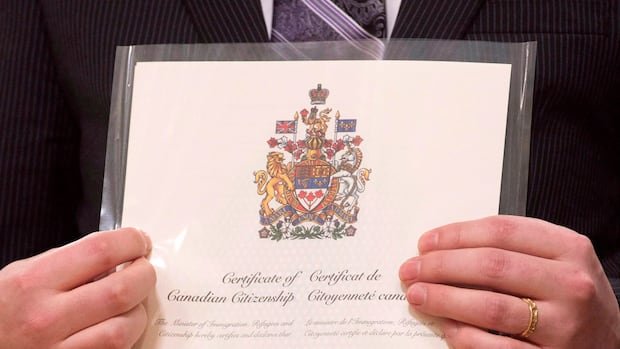

Applications for Canadian citizenship certificates have surged globally in recent months, notably driven by a substantial influx of requests from the United States, as per insights obtained by CBC News. The adoption of the “Lost Canadian” legislation by Parliament late last year led to a nearly 50% increase in the number of individuals receiving certificates between April 1 and May 31, based on the latest data disclosed by CBC.
Bill C-3 enables individuals to claim citizenship if they can demonstrate descent from a Canadian ancestor, irrespective of how many generations back that ancestor emigrated from Canada. This legislation was enacted following court rulings that deemed the prior restriction of citizenship to the first generation born abroad too limiting.
From mid-December, when Bill C-3 came into force, until May 31, approximately 6,100 citizenship certificates were granted by Immigration, Refugees, and Citizenship Canada (IRCC) to eligible individuals. This marks a rise from the 4,075 certificates issued during the period from mid-December to March 31.
Moreover, an additional 17,390 people obtained certificates due to having a Canadian parent. Previously, individuals born outside Canada needed a Canadian parent to qualify for citizenship before the bill’s enactment.
The newly issued certificates allow the 23,490 recognized Canadian citizens to apply for Canadian passports and reside and work in Canada. However, Elections Canada stipulates that these individuals cannot vote in federal elections unless they have resided in Canada at some point in their lives.
Of the individuals recognized between mid-December and the end of May, almost half were born in the U.S. Data from IRCC reveals that 3,110 Americans are now eligible for Canadian citizenship certificates under Bill C-3, while an additional 8,125 Americans received certificates because one of their parents was Canadian.
However, this surge is just the beginning of a larger trend. The number of pending citizenship certificate applications has skyrocketed, with around 121,800 individuals awaiting a decision on their applications, up from 70,400 in May. The estimated processing time has also doubled from 12 months in May to 25 months by August 10.
Estimates on the potential number of individuals qualifying for Canadian citizenship under Bill C-3 vary widely, with some suggesting that hundreds of thousands of Canadians who migrated to the U.S. over a span of 100 years could be impacted by the law change. The parliamentary budget officer approximates that 115,000 individuals could be affected.
Despite initial expectations of moderate application volumes, the significant increase in requests prompted IRCC to make preparations for the implementation of Bill C-3. The department aims to process applications promptly while upholding the integrity of the citizenship program.
On another front, archivists in Canada are facing a surge in requests for genealogical records necessary to verify lineage for individuals applying for Canadian citizenship under Bill C-3. The Association of Canadian Archivists reports a substantial rise in requests, causing strain on institutions and archivists.
The association emphasizes the need for increased funding to accommodate the demand for records generated by Bill C-3 and calls for support for archives across the country. The suspension of numerous citizenship certificates by IRCC due to document issues has further complicated the situation, potentially requiring individuals to provide additional genealogical evidence to maintain their citizenship status.