
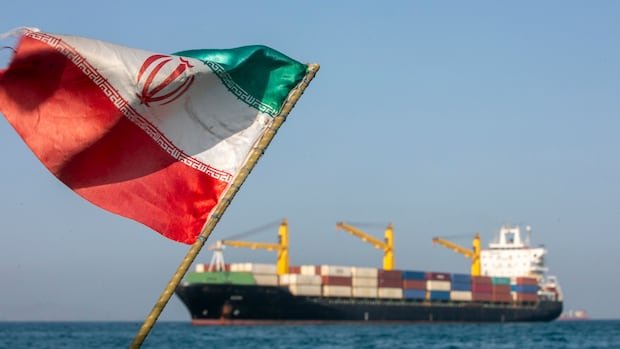

In a recent military action, United States forces targeted Iranian rocket launchers in the Strait of Hormuz, breaking a period of ceasefire in a conflict that has spanned over six months. The strike was in response to Iran’s Islamic Revolutionary Guard Corps (IRGC) preparing to launch rockets with sea mines into the strait. The U.S. military had previously cleared sea mines from the international shipping routes in the strait.
Reports from Iran indicated sounds of explosions near Larak Island in the strait, with Iranian state television later showing ballistic missiles being fired at U.S. bases in Jordan in retaliation. The Jordanian armed forces intercepted eight missiles that breached the country’s airspace.
U.S. military officials refuted Iran’s claims of aggression, stating that the strikes were a targeted action against minelaying forces to safeguard civilian mariners, commercial shipping, and global trade routes. The conflict escalation raised concerns over the potential return to open conflict in the region.
The Trump administration recently announced a shift towards leveraging economic pressure, rather than military tactics, to end the ongoing war with Iran. Sanctions are now being emphasized to discourage countries or entities from conducting business with Tehran. This change in strategy comes amid concerns about depleted munitions supplies and the impact of prolonged conflict on U.S. military readiness worldwide.
As the conflict continues, President Trump’s earlier optimism for a swift resolution appears to be waning. He has emphasized the significant damage inflicted on Iran’s navy and air force, while Iranian officials claim billions of dollars in losses. Despite Trump’s assurances that the Strait of Hormuz remains open, reduced commercial traffic levels indicate ongoing challenges in the region.
Recent incidents, such as an unidentified projectile striking a tanker ship near Oman, underscore the volatility in the area. International monitoring agencies have noted disruptions in commercial traffic through the strait, highlighting the strategic significance and risks associated with the ongoing conflict.