
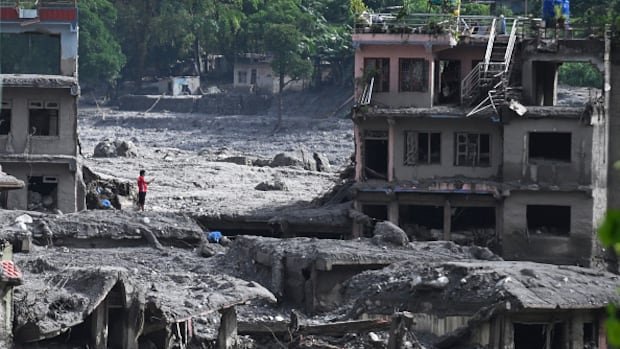

Rescue teams, accompanied by search dogs, are diligently scouring the border area between Nepal and China in search of the thousands of individuals still unaccounted for after the devastating floods that ravaged the Himalayan region, resulting in over 1,000 fatalities. In Kathmandu, police are interring multiple bodies in mass graves while Nepal’s disaster agency reports 1,003 confirmed deaths and 3,916 missing persons, including 583 foreigners. China’s latest update lists 16 deaths and 546 missing individuals, including 261 foreigners.
The extensive damage caused by the disaster on August 26 is impeding rescue operations in both countries, with landslides, impassable roads, and severe destruction isolating many communities. Rescuers are working tirelessly to reach around 900 missing workers, with an estimated 500 trapped inside tunnels at hydropower projects in Nepal. Foreign experts are assisting Nepal’s teams as they navigate challenging conditions to locate survivors.
On the Chinese side, rescue crews are focusing their efforts on areas affected by mudslides, particularly near the Gyirong Port border crossing, which sustained significant damage. Teams are using various methods, including search dogs and heavy machinery, to locate survivors and clear access routes to the disaster zone. In Kathmandu, police are conducting burials under adverse weather conditions, with temporary graves being used until proper identification can be established for each body.
Relief operations are expanding to reach stranded communities, with over 11,800 people rescued thus far by emergency crews utilizing helicopters and aircraft in areas where infrastructure has been severely impacted. Both Nepal and China are receiving international aid, with Canada sending assistance and China dispatching a second batch of relief supplies, including drones and DNA testing equipment. The disaster, triggered by a glacial collapse in the Himalayas, underscores the urgent need for climate change action, as emphasized by Nepal’s Prime Minister.
Amidst the ongoing rescue and relief efforts, individuals like filmmaker Manish Maharjan are contributing their skills to assist in locating stranded individuals using drones and innovative search methods. Maharjan’s experiences highlight the challenging conditions faced by rescuers, especially in accessing and searching through flooded tunnels.