
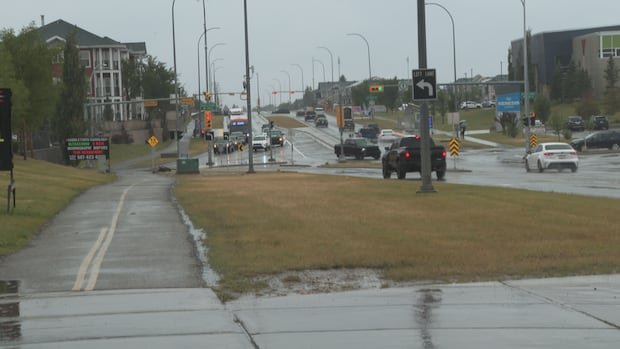

A group of individuals involved in an extended international student demonstration in northeast Calgary is facing potential immigration consequences, with suggestions that they may have to depart Canada, as indicated by an immigration attorney. The Canada Border Services Agency (CBSA) confirmed that its officers were called to the protest location to verify the immigration statuses of the participants. Out of the 20 individuals checked, 12 were flagged as potentially inadmissible under the Immigration and Refugee Protection Act. The CBSA spokesperson mentioned that these individuals were requested to appear at the CBSA office for further questioning later that day, with no additional details disclosed due to privacy regulations.
The agency emphasized that all individuals subject to immigration enforcement measures, including removal orders, are entitled to due legal processes. The protests at Saddletowne Circle, near the Genesis Centre, involved international graduates advocating for work permit-related issues. Similar demonstrations are also occurring in Edmonton, with some Alberta students resorting to hunger strikes to highlight their concerns.
Several graduates from Portage College expressed disappointment after being denied post-graduation work permits, despite their initial expectations. Portage College is seeking clarification from Immigration, Refugees and Citizenship Canada (IRCC) regarding this matter. The IRCC clarified that students commencing their studies before May 2024 are unaffected by the changes and that the refusals pertain to specific program requirements for post-graduation work permits.
The Calgary Police Service requested assistance from the CBSA during the demonstration due to reported disturbances and violations. The police conducted checks on individuals setting up structures without permits, leading to the involvement of the CBSA for verification purposes. Immigration lawyer Jatin Shory, representing a group challenging work permit denials, cautioned against public protests due to potential legal repercussions. Shory highlighted the evolving immigration landscape in Canada and the consequences of being undocumented.
While the outcome of the individuals’ interviews with the CBSA remains undisclosed, Shory mentioned the likelihood of exclusion orders being issued, mandating immediate departure from Canada with a one-year ban on re-entry. Legal avenues exist to contest such orders, but success rates are low, with potential removal within weeks post-order issuance.