
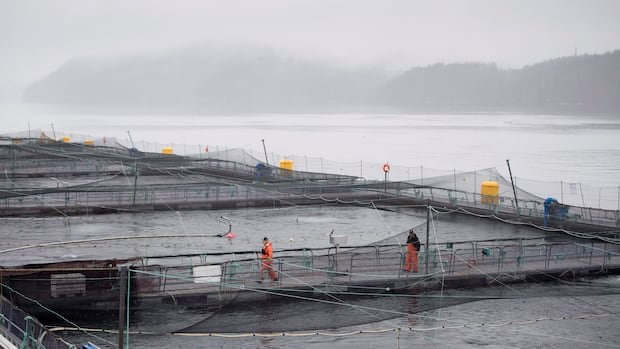

A recent study by the Pacific Salmon Foundation revealed that viral heart disease, specifically heart and skeletal muscle inflammation (HSMI), is more prevalent in open-net salmon farms in British Columbia’s Broughton Archipelago than previously acknowledged. The research detected HSMI in five out of seven salmon farms in the region, indicating a higher incidence than initially recognized.
The study highlighted the potential spread of the disease-causing virus, piscine orthoreovirus (PRV), from farmed fish in open-net pens to wild fish in the surrounding waters. Lead author Emiliano Di Cicco emphasized that the prevalence of the disease is significantly greater than previously assumed, based on earlier investigations.
Concerns over disease transfer from farmed fish to wild salmon have long been a subject of debate regarding open-net fish farms along British Columbia’s coast. The study’s findings indicated that nearly seven percent of the 749 examined salmon exhibited signs of HSMI, shedding light on the impact of PRV on Pacific salmon health.
While the Department of Fisheries and Oceans (DFO) in British Columbia currently classifies PRV as non-pathogenic, Di Cicco urged the government to reconsider this classification and align diagnostic criteria with global standards. He stressed the importance of recognizing the chronic nature of the disease, which may not always present with observable symptoms or significant mortality spikes.
In response to the study, DFO stated its intention to review the findings for future considerations. The agency highlighted the collaboration with scientific experts in establishing diagnostic criteria for HSMI, aiming to maintain scientific rigor and align with international standards.
The study, conducted in partnership with Indigenous communities including the Mamalilikulla, ʼNa̱mǥis, and Ḵwiḵwa̱sut’inux̱w Ha̱xwa’mis First Nations, emphasized the significance of protecting salmon populations. Indigenous leaders expressed their longstanding concerns over the impact of open-net pen salmon farms on salmon populations, emphasizing the cultural and ecological importance of salmon to their communities.