
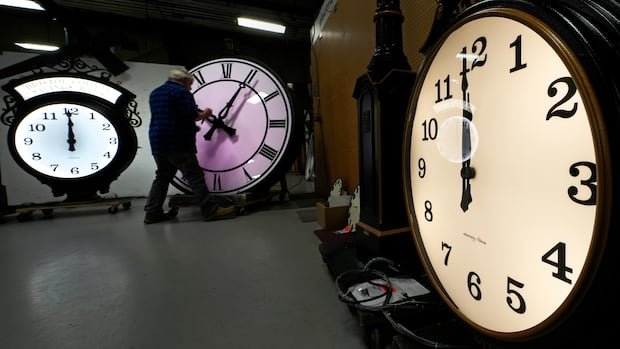

In a significant move, a global timekeeping authority recently decided to eliminate leap seconds after over half a century of using them to synchronize our clocks with the Earth’s rotation. This decision means that our clocks will gradually fall out of sync by a full hour, a process that could take hundreds or even thousands of years.
The precise atomic time, established in the 1950s by monitoring atomic vibrations, is slightly out of alignment with solar time, which is based on the sun’s position in the sky relative to a specific Earth location due to the gradual slowing of the planet’s rotation. The introduction of leap seconds in 1972 aimed to address this discrepancy, with an initial addition of ten seconds.
The International Earth Rotation and Reference Systems Service has since been monitoring the difference between solar and atomic time to determine when to insert an extra second. Leap seconds, added 27 times so far, most recently in 2016, are typically incorporated at the end of December or June.
The decision to phase out leap seconds comes as managing these adjustments becomes increasingly challenging with the growing reliance on precise timekeeping systems. The complexity of implementing leap seconds poses difficulties for various industries, particularly tech and telecommunications, which depend on accurate time synchronization.
The potential risks associated with leap seconds include system failures due to inconsistencies in how networks handle the additional second, as evidenced by past incidents like Reddit and LinkedIn crashes in 2012 and brief outages at Cloudflare in 2016. The escalating demands for timing accuracy and network synchronization heighten the risks of such disruptions.
Moreover, recent observations indicate that the Earth’s rotation has accelerated in the past few years, raising the prospect of a “negative leap second” where a second may need to be deducted in the future. This scenario could have detrimental effects on software systems, emphasizing the challenges posed by leap seconds in modern technological environments.
The approved solution, effective from May 2027, involves allowing the accumulated leap seconds to reach 3,600, equivalent to an hour, before making adjustments. While some experts support this decision, others express concerns about the impact on computerized economies and the need for ongoing technical solutions to address timekeeping challenges.
The intricacies of timekeeping, influenced by various factors including Earth’s rotation speed fluctuations and external influences like climate change, underline the inherent complexities in maintaining accurate time systems. Despite these challenges, experts suggest that embracing imperfections in timekeeping systems may be a necessary reality in our ongoing quest for temporal precision.