
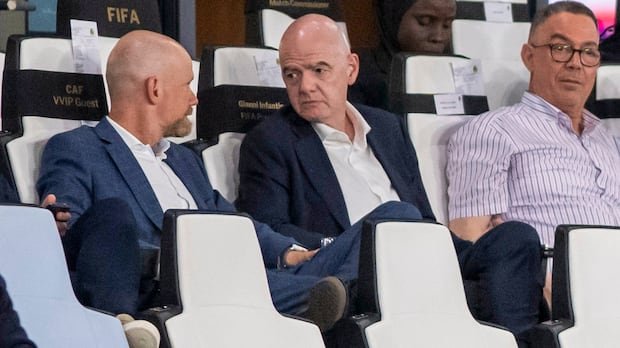

Italy’s soccer federation has joined the growing number of nations withdrawing support for FIFA President Gianni Infantino. In a statement released on Wednesday, the FIGC announced it would no longer endorse Infantino’s reelection bid in March due to concerns about recent FIFA governance and international competition development initiatives.
Infantino has faced mounting pressure to resign following his now-abandoned proposal to sell shares in the World Cup to private equity investors. Three continental confederations accused him of deceit, and UEFA threatened to boycott FIFA events. FIGC President Giovanni Malagò emphasized the federation’s commitment to working with UEFA and other European associations to promote a soccer model based on merit, solidarity, sustainability, and fan engagement.
The English, Welsh, and Irish soccer federations previously withdrew their support for Infantino’s reelection, with Norway also urging him to step down. Some FIFA member federations, including Morocco and Qatar, continue to support Infantino, while Saudi Arabia, the 2034 World Cup host, has not publicly endorsed him despite their political ties.
UEFA is expected to retract its boycott threat against FIFA competitions after receiving assurances that Infantino’s failed World Cup sell-off plan will not be revived. UEFA member federations are convening in Monaco to discuss this decision and are likely to confirm the end of the boycott threat. This development will allow six European teams to participate in the upcoming FIFA Under-20 Women’s World Cup in Poland.
Infantino’s proposal for a subsidiary controlling FIFA commercial rights, including the World Cup, was met with global criticism and led to UEFA’s strong opposition. The plan was swiftly withdrawn following backlash from UEFA, AFC, and CONCACAF, prompting UEFA to seek guarantees that the spinoff scheme would not resurface in a different form. With these assurances in place, UEFA expressed its lack of confidence in Infantino’s leadership and its intent to challenge his reelection in March.