
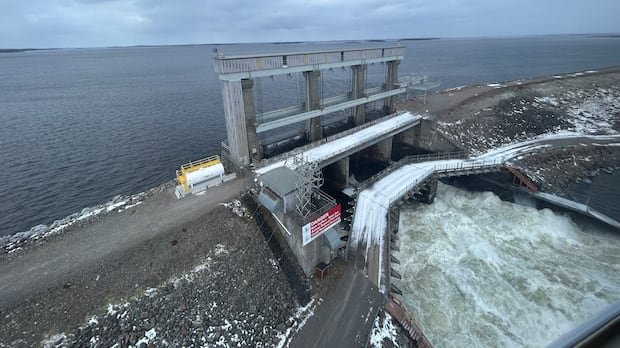

A recent agreement between Newfoundland and Labrador and Quebec regarding Churchill Falls reveals plans to enhance energy output and its distribution breakdown. Insider sources disclosed to CBC News that a memorandum of understanding was nearing finalization between the provinces, with an official announcement expected shortly.
Reported initially by Radio-Canada, insiders indicated that each province will receive a significantly higher amount of electricity compared to the previous memorandum. Quebec is set to gain approximately 10,000 MW, while Newfoundland and Labrador will secure at least 2,350 MW, possibly reaching up to 3,000 MW, pending final negotiations. The development involves scaling up hydroelectric capabilities at Gull Island and enhancing turbine capacity at the existing Churchill Falls facility to achieve the increased energy production.
Additionally, the new agreement incorporates wind power, a feature absent in the 2024 memorandum. Notably, the pricing of electricity sales is projected to remain relatively stable.
Minister Lela Evans refrained from divulging specifics of the updated memorandum during discussions with reporters. Previously, N.L. Premier Tony Wakeham vowed to subject the Churchill Falls agreement to a public referendum if his party assumed governmental leadership. When questioned about the possibility of a referendum for the new deal, Evans redirected the focus to the government’s initiatives and economic benefits for residents.
Labrador City Mayor Jordan Brown expressed the critical need in his region for the anticipated agreement to bolster energy production. The revised deal includes a guaranteed transmission capacity of 985 megawatts through Quebec, enabling Newfoundland and Labrador to export Churchill River electricity to external markets via Hydro-Quebec’s network.
Experts like Gabe Gregory, who co-authored a comprehensive review of the 2024 MOU, highlighted the significance of improved market access. However, Gregory urged caution, emphasizing the importance of independent reviews and honoring commitments to public consultation on resource management.
Ben Oates of the Friends of Renewable Churchill Energy group noted the similarities between the new and previous MOUs, emphasizing the positive aspects of securing fair value for power resources. Oates raised concerns about potential political risks to the deal, particularly in light of the upcoming Quebec election.
The developments in the Churchill Falls agreement are closely monitored for further details and potential implications.