
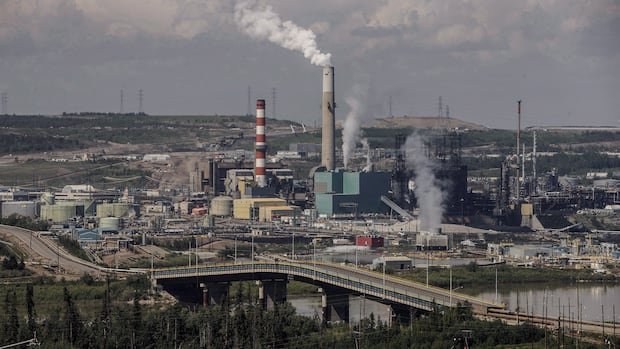

An Alberta judge has rejected the Athabasca Chipewyan First Nation’s bid for a judicial review aimed at the program responsible for ensuring financial resources for the cleanup of coal mines and oilsands operations. Justice Shannon Davis of the Court of King’s Bench of Alberta ruled on Wednesday that the application was dismissed because the ACFN did not provide legal notice to all relevant parties within the mandated six-month timeframe.
The ACFN argued that it only served the Alberta government, believing the issue centered on the Crown’s duty to consult. However, major operators like Canadian Natural Resources, Suncor Energy, and Imperial Oil contended that they should have also been served as they would be directly impacted by any changes to the program.
Justice Davis sided with the companies during the proceedings in Fort McMurray, describing the six-month time constraint as rigid and non-negotiable. He emphasized that failing to file or serve within the stipulated period is fatal to the case.
The ACFN had challenged Alberta’s Mine Financial Security Program (MFSP), which mandates that oilsands and coal mine operators demonstrate financial capacity to cover reclamation expenses post-closure. Instead of requiring full upfront payment, the program permits oilsands operators to leverage an “asset-to-liability” strategy, where company assets can serve as collateral if they exceed liabilities by threefold.
As of June 30, 2025, the Alberta Energy Regulator reported liabilities of $52.7 billion, with the MFSP having amassed $2.6 billion in securities since its inception in 2011. The MFSP’s asset value was documented at $683 billion.
The province initiated a review of the program in 2022 following consultations, wherein the ACFN criticized the MFSP’s management and referenced past reports from the auditor general that raised concerns about the program.
Among the ACFN’s contentions were claims that the program underestimates operators’ liabilities, overlooks potential impacts of global oil market shifts on shutdowns, and lacks incentives for reclamation efforts throughout a mine’s lifespan.
The MFSP was reissued in October 2024 and subsequently updated in December of the same year. However, the ACFN felt that their concerns were not adequately addressed, leading them to file for a judicial review in April 2025.
Environmental law group Ecojustice represented the ACFN in the legal proceedings. Ecojustice lawyer Susanne Calabrese expressed disappointment with the court’s decision, indicating that the organization is exploring further legal avenues. Calabrese noted that the court did not address the ACFN’s grievances.
The ACFN maintains that Alberta has not fulfilled its constitutional responsibilities in ensuring proper reclamation of oilsands mines on their traditional lands and deems the MFSP as insufficient to guarantee restoration of their territories. They assert that reclamation is not solely an environmental concern but also a taxpayer, human, and Indigenous rights issue that should concern all Albertans.
A spokesperson for Alberta’s Ministry of Environment and Protected Areas stated that the province is reviewing the ruling, while legal representatives for Suncor, Canadian Natural Resources, and Imperial Oil did not provide comments upon request.