
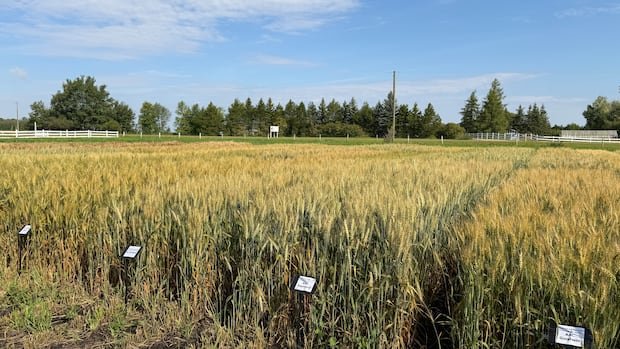

In northeastern Alberta, researchers are addressing copper deficiencies in cattle by applying the mineral to wheat crops to enhance fertility and overall health. Concurrently, they are experimenting with various cover crops to determine the most effective weed suppression methods, aiming to reduce herbicide usage.
Jay Cory, a farmer and chair of the Lakeland Agricultural Research Association (LARA), emphasized that research stimulates innovative ideas for agricultural practices. LARA, a non-profit organization serving northeastern Alberta, conducts diverse studies at its Fort Kent research field, located about 250 kilometers northeast of Edmonton.
Local producers were recently invited to tour the facility and observe the ongoing trials, which focus on enhancing crop productivity and sustainability through various crop varieties and practices.
Maria Angelica Ouellette, a research scientist at LARA, highlighted the importance of conducting trials under real-world conditions, including fluctuations in precipitation and temperature. She mentioned that feedback from regional farmers guides their research efforts, aiming to promote sustainable and productive land use.
This year, researchers are facing challenges posed by excessively wet weather, impacting crop performance and allowing for valuable insights into trial outcomes under unexpected growing conditions. The program at LARA is driven by producers’ needs, ensuring that research aligns with local priorities and insights from those intimately familiar with the land.
Alyssa Krawchuk, LARA’s executive director, emphasized the significance of tailoring research to local conditions, recognizing the diverse climatic variations across the province. The organization’s primary goal is to conduct unbiased, locally relevant research and disseminate findings to producers through events like field tours.
Jay Cory stressed the importance of balancing innovative solutions with cost-effectiveness, emphasizing the need to evaluate the economic impact on yields. By testing new products and techniques at the research facility, farmers can mitigate risks associated with adopting unfamiliar practices on their own land.
Neil Cory, a longstanding farmer and original director of LARA, emphasized the personal significance of risk mitigation through research trials, providing a platform for evaluating and adopting new agricultural practices without incurring potential losses on their own farms.