
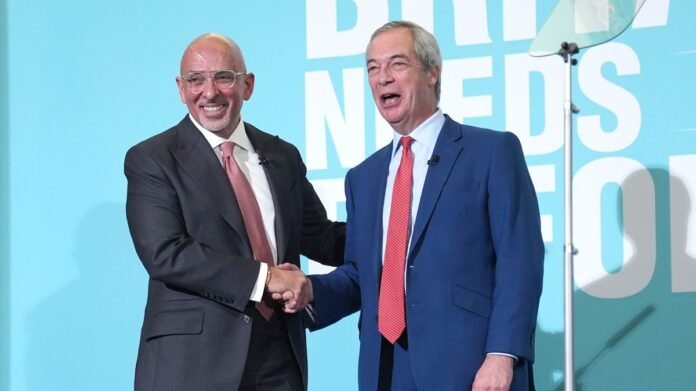

A former prominent Conservative figure, who once compared Nigel Farage to a key figure in Hitler’s regime, has been revealed as the latest member to switch allegiance to the Reform party.
Nadhim Zahawi, a wealthy individual who faced dismissal from government due to undisclosed tax investigations, had previously expressed concerns about living under Farage’s leadership. The Tories alleged that Zahawi had sought a peerage from them multiple times without success before defecting to Reform.
Joining a growing trend of Conservative members moving to Reform, Zahawi’s switch has sparked accusations that Farage’s party is becoming a sanctuary for disgraced former Conservative officials. In response, the Conservatives criticized Reform as a gathering place for politicians seeking personal gain rather than serving the public.
TUC General Secretary Paul Nowak criticized Zahawi’s move, highlighting the alignment with the wealthy rather than working-class interests. Zahawi, who faced scrutiny for breaching the ministerial code over tax matters, settled the issue by paying a hefty penalty to HMRC.
Known for his substantial wealth, estimated at up to £100 million in 2023, Zahawi faced backlash for past financial dealings, including claiming expenses for heating stables on his estate. The defection of the former MP, who had a lucrative stint in the oil industry, raised questions about his integrity and motivations.
Amid the political upheaval, Labour Party officials and Liberal Democrat representatives denounced Zahawi’s move, portraying it as a shift towards self-serving motives rather than public service. The ongoing feud between Zahawi and Farage, marked by public criticisms and personal attacks, continues to fuel controversy within political circles.
Despite the controversies surrounding Zahawi’s tax affairs and party switch, supporters argue that his experience navigating complex financial matters could be an asset in political leadership. As the political landscape evolves, the implications of Zahawi’s defection and his alignment with Reform underscore the shifting dynamics within the political arena.