
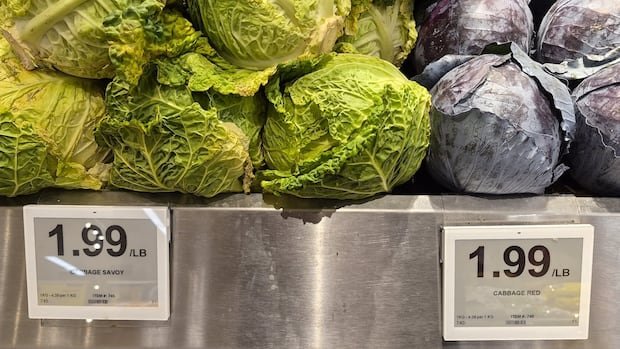

Loblaw has decided to reinstate country-of-origin labeling on produce signs in its stores after facing substantial criticism from customers. The controversy arose when shoppers noticed that the information indicating where the food was grown was missing from produce displays.
Karla Hennig, a dedicated “Buy Canadian” shopper from Penticton, B.C., expressed disappointment at the absence of labeling in her local Superstore, emphasizing the importance of transparency in knowing what consumers are purchasing. The removal of origin details was not well-received by many Loblaw customers across Canada, except in Ontario and Quebec where labeling regulations are enforced.
Edmonton resident Karl Mueller raised concerns after observing the lack of country-of-origin labeling at his Real Canadian Superstore. He voiced his disapproval on social media and directly to the chain’s management, highlighting the inopportune timing of such a decision amidst trade tensions.
Agricultural economist Ellen Goddard predicted Loblaw’s reversal of its policy change, noting the heightened emotional response from consumers in light of ongoing trade uncertainties. In response to inquiries, Loblaw acknowledged the need to support Canadian products during trade uncertainty and announced the reintroduction of country-of-origin information for produce and a special symbol for American products impacted by tariffs.
While some shoppers cautiously welcomed the news of Loblaw’s policy reversal, others like Mueller emphasized the significance of consumers’ influence on corporate decisions by supporting local businesses.
Despite initially justifying its decision based on sourcing challenges, Loblaw faced backlash for removing country-of-origin labeling. The company cited the need for shoppers to check individual produce stickers or packaging for sourcing details, a response that did not satisfy customers like Hennig, who found it frustrating to seek out such information in-store.
The shift in Loblaw’s labeling policy was influenced by regulatory issues, including fines and warnings from the Canadian Food Inspection Agency for misrepresenting imported products as Canadian. Goddard suggested that the negative publicity likely prompted Loblaw to rethink its labeling strategy.
Similar to Loblaw, Sobeys also faced scrutiny for misleading promotions and subsequently stopped using maple leaf symbols to promote Canadian products. Despite criticism, federal regulations do not mandate country-of-origin labeling for bulk produce, prompting calls for new legislation to ensure transparency for consumers.
The debate over country-of-origin labeling highlights the importance of trust and transparency in the food industry, as consumers seek clear information to make informed purchasing decisions.