
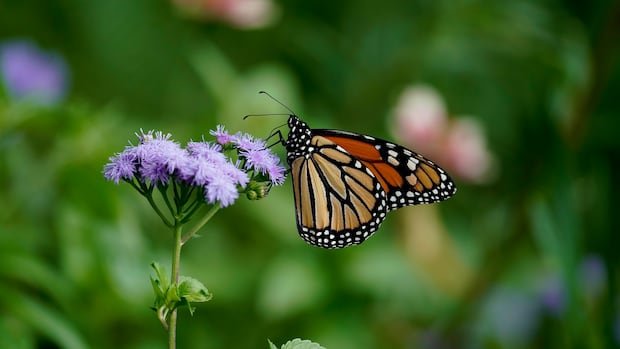

MaryAnn Lepp observed a significant increase in the number of monarch butterflies undergoing metamorphosis in her garden. She counted 20 caterpillars feeding on her swamp milkweed in just one day this week. This surge in backyard milkweed patches on the Prairie is being witnessed by numerous Canadian monarch enthusiasts amid favorable wet and hot weather conditions.
Expressing her excitement, Lepp pointed out the appearance of the second chrysalis in her garden in La Broquerie, located about 60 kilometers southeast of Winnipeg. She noted an increased presence of butterflies compared to previous years.
While experts cannot definitively attribute the surge to weather conditions, they acknowledge the positive impact on the federally endangered monarch butterflies. Reports of caterpillars, chrysalises, and monarch butterflies are circulating widely, indicating a positive trend for the species.
Marika Olynyk, curator of the Living Prairie Museum, mentioned the abundant presence of monarchs in Winnipeg throughout the summer, with consistent sightings of caterpillars, chrysalises, and butterflies. The museum’s tall grass prairie preserve offers a variety of native plants, including different milkweed species that attract pollinators.
Monarch butterflies primarily feed on nectar from milkweed flowers but have a diverse diet that includes various flowering plants. However, during the caterpillar stage, they exclusively consume milkweed leaves. Despite efforts to plant milkweed and native wildflowers, their populations are still limited due to habitat loss from converting native grasslands to farmland.
The monarch’s biggest threat is habitat loss, highlighted Olynyk. The decline of tallgrass prairies across North America has significantly impacted their population and habitat availability. Efforts to protect monarchs led to their endangered status designation in 2016, emphasizing the importance of conservation measures.
In addition to monarchs, the Assiniboine Park Zoo has seen an increase in native prairie garden populations, including the critically endangered Poweshiek skipperling. The zoo’s breeding and release programs aim to support the recovery of this species. The favorable weather conditions this year have positively impacted not only monarchs but also other butterfly species.
Continuing conservation efforts, zoo staff will attach radio transmitters to monarchs this fall to track their migration to Mexico. Enthusiasts like Lepp are dedicated to safeguarding caterpillars and chrysalises to ensure the survival of these delicate creatures and promote environmental conservation.