
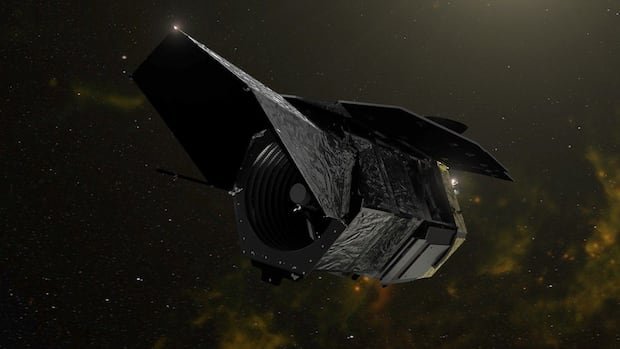

At 7:26 a.m. this Sunday, a brand-new space observatory is set to launch from Cape Canaveral, Florida, atop a Falcon Heavy rocket. The Nancy Grace Roman Space Telescope, named after NASA’s first chief astronomer and often referred to as the “mother of the Hubble Space Telescope,” will embark on a significant mission to explore the mysteries of our universe.
Once in orbit at a distance of 1.5 million kilometers, precisely located at the L2 point where gravitational forces maintain a stable satellite orbit, the telescope will commence a five-year mission, potentially extendable beyond that timeframe.
What sets the Nancy Grace Roman Space Telescope apart from its predecessors like the Hubble Space Telescope and the James Webb Space Telescope is its unique set of instruments. With a 2.4-meter mirror akin to the Hubble, the telescope also features a coronagraph for blocking out starlight to unveil planets orbiting distant stars. Moreover, its Wide Field Instrument, as sensitive as the Hubble’s, can capture images of areas 100 times larger, offering a significant upgrade in observational capability.
The telescope’s advanced camera will have the capacity to image billions of stars, enabling diverse sky and stellar surveys. The anticipated discoveries expected from the Nancy Grace Roman Space Telescope are highly promising and eagerly awaited by astronomers worldwide.
One of the key objectives is the search for exoplanets beyond our solar system. With over 6,300 confirmed exoplanets to date, mostly discovered by the Kepler Space Telescope, astronomers aim to further explore other stellar systems to understand the uniqueness of our own solar system. The telescope will employ the transit method, observing stars for planetary transits on a much larger scale than previous missions, potentially expanding the discovery of transiting exoplanets significantly.
In addition to the transit method, the telescope will utilize microlensing to delve deeper into the search for exoplanets, particularly focusing on identifying Earth-like planets. This innovative approach will enhance the understanding of planetary systems and their characteristics.
Another crucial aspect of the telescope’s mission is the investigation of dark matter and dark energy. Despite comprising only a small fraction of the universe that is visible, dark matter and dark energy play essential roles in cosmic structure and expansion. By studying galaxies and globular clusters, the telescope aims to map the distribution of dark matter and normal matter, shedding light on the mysteries of these invisible cosmic components.
Astrophysicists involved in the Nancy Grace Roman Space Telescope’s observational programs are excited about the potential discoveries awaiting them, particularly in the realms of cosmology and deep space exploration. The telescope’s comprehensive survey capabilities offer a unique opportunity to advance scientific understanding of the fundamental forces shaping our universe.