
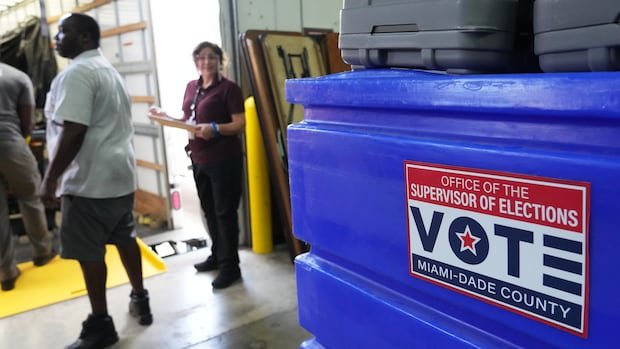

The recent endorsement by the U.S. Supreme Court of President Donald Trump’s mail-in voting limitations has cast uncertainty over the voting method utilized by nearly one-third of Americans. Despite the lack of immediate procedural changes for the upcoming midterm elections, the high court’s majority emphasized that they have not yet determined the constitutionality of Trump’s directive, asserting that the states challenging it lack legal standing.
Justice Ketanji Brown Jackson dissented, expressing concerns that the decision introduces unnecessary chaos and uncertainty into the electoral process. Trump’s executive order, issued in March, instructs his administration to compile lists of eligible voters and mandates that the U.S. Postal Service send mail ballots solely to individuals on those lists. A separate injunction currently prohibits the postal service from implementing these changes, but the administration has filed a motion to lift this injunction and has proposed new regulations that would come into effect once legal obstacles are removed.
These regulations include enforcing specific envelope formats for mail ballots, potentially necessitating revisions by some jurisdictions, and requiring states to utilize an electronic system to inform the postal service of voters using mail ballots. Failure to comply with these rules could result in mail ballots not being dispatched. Despite these developments, experts like Tammy Patrick of the Elections Center caution that the new requirements are impractical for states to meet, as no state currently conducts elections in this manner.
Jesse Salinas, registrar of Yolo County in California, echoed these sentiments, highlighting the logistical challenges posed by the looming deadlines for ballot distribution. Trump’s administration has faced previous setbacks in attempting to impose voting restrictions, including judicial blocks on executive orders and legislative stalling of the Save America Act in the Senate. Additionally, the Supreme Court ruled against the administration’s efforts to restrict the counting of ballots arriving after election day.
The administration’s pursuit of voter roll information from various states has encountered legal resistance, with courts rejecting multiple requests due to privacy law violations. Trump’s persistent criticism of mail-in voting, alleging potential fraud despite lack of widespread evidence, has created a partisan divide in voting practices, with Democrats increasingly embracing mail voting. While isolated cases of voter fraud exist, there is no substantiated proof of the massive fraud Trump has claimed influenced past elections.