

U.S. President Donald Trump stated on Tuesday that there were no ongoing discussions with Iran, countering Iran’s claim that the crucial Strait of Hormuz was still closed to shipping. The lack of progress towards resolving the six-month conflict led to a rise in oil prices and a decline in stock markets, along with increased borrowing costs for major economies including the U.S., triggering concerns about long-term inflation and fiscal consequences.
Following the expiration of a temporary ceasefire agreement on Monday, a senior Iranian official indicated that Iran was shifting towards a more aggressive military stance due to the diplomatic impasse. Despite this, there were no reports of fresh hostilities from either side on Tuesday.
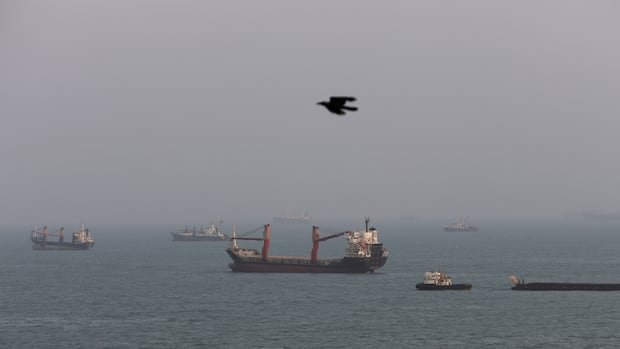
Trump emphasized in a post on Truth Social that there were no ongoing or scheduled talks with Iran, confirming that the Naval Blockade was still in place and operational. He assured that the Strait of Hormuz was open for shipping as all water mines had been either removed or detonated.
Jared Kushner, Trump’s son-in-law and special envoy, had expressed optimism on Monday, suggesting that talks with Iran were still active and possibly more substantial than before. The conflict, which initiated with joint U.S.-Israeli strikes on Iran, has now evolved into a standoff, with Iran persisting in threatening shipping in the strait while Washington warns of potential renewed attacks if negotiations fail to bring a lasting resolution.
One of the primary U.S. objectives is to prevent Iran from acquiring nuclear weapons. However, experts believe this goal is challenging without addressing the enriched uranium allegedly stored at previously targeted Iranian sites.
Despite Trump’s positive outlook on the situation in the Gulf, reports continued to emerge about attempts to disrupt shipping activities. The United Arab Emirates reported detecting two ballistic missiles launched from Iran, targeting maritime traffic. The missiles ultimately landed in the sea. Iran’s foreign ministry spokesperson dismissed the UAE’s accusations as baseless.
The UAE suspended all trade activities, exchanges, and financial transactions with Iran due to escalating regional tensions that threatened peace and security. Direct cargo shipping between the UAE and Iran, which had recently resumed in late June, was again halted.
Reports surfaced on Tuesday that a vessel transiting through the Strait of Hormuz was hit by an unknown projectile, causing damage to the engine room and injuring crew members. The Omani Coast Guard provided assistance, while Tehran remained silent on the incident.
Iran’s top negotiator, Mohammad Baqer Qalibaf, declared that the strait would remain closed until the U.S. fulfilled the conditions outlined in an interim deal signed in June. These conditions include lifting the blockade on Iranian ports, removing oil sanctions, releasing frozen assets, and halting threats and military operations on all fronts.
The agreement, which aimed for an immediate and permanent end to military activities, quickly faltered over a dispute concerning control of the Strait of Hormuz, a vital waterway for global oil and natural gas transportation.
Iran expressed willingness to engage in dialogue with the U.S. but emphasized that negotiations should not be equated with surrender. Iranian officials reiterated their commitment to defending the country’s security, dignity, and allies while avoiding war.
Despite projecting resilience, Iranian leaders fear that increased economic sanctions could exacerbate hardships, reignite unrest, and undermine the legitimacy of the Islamic Republic. The conflict has resulted in thousands of casualties, primarily in Iran and Lebanon, with Iran launching attacks on U.S. military assets in several countries.
Brent crude oil futures surged during the conflict, reaching $126 US per barrel, a 75% increase from prewar levels. On Tuesday, Brent crude settled slightly higher at just over $91 US per barrel. The U.S. administration hinted at further economic actions against Iran through sanctions in the coming months.