
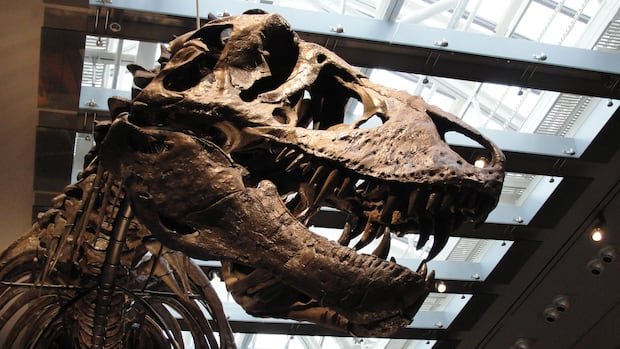

In a recent study, scientists utilized a unique chemistry technique to determine the body temperature of two Tyrannosaurus rex specimens, shedding light on the long-debated topic of dinosaur thermoregulation. Aradhna Tripati, a geochemist and professor at the University of California, Los Angeles, explained the innovative approach used in the research, which was documented in a publication in the journal Science Advances.
The traditional method of inserting a thermometer into a living creature to measure body temperature was clearly not an option for extinct dinosaurs like the T. rex, which perished millions of years ago. Instead, researchers focused on analyzing specific hard tissues such as tooth enamel and eggshells, known to retain chemical signals that vary with temperature.
Through careful examination of the mineral bioapatite found in these tissues, scientists could determine the temperature at which the bonds between carbon and oxygen isotopes formed. By comparing these findings with data from living animals with known body temperatures, researchers estimated the body temperature of the T. rex specimens.
Previously, a similar technique was applied to analyze eggshells from other dinosaur species, suggesting they were warm-blooded. However, the thin tooth enamel of the T. rex posed a challenge for obtaining samples for analysis. After refining their methodology using teeth from the megalodon, researchers successfully measured the body temperature of a young adult T. rex named Thomas, along with another unidentified specimen, revealing temperatures comparable to large mammals and certain flightless birds.
The implications of these findings extend beyond mere temperature readings. According to Tripati, an animal’s body temperature directly influences its behavior and habitat preferences. The warm-blooded nature of the T. rex suggests a versatility in environmental adaptation, potentially enabling them to thrive in various regions, including extreme climates like the Arctic.
Experts in the field, such as paleontologist Anthony Fiorillo, have praised the study for providing valuable insights into the ancient creatures’ biology and adaptation strategies. The discovery raises intriguing questions about how dinosaurs, particularly predators like the T. rex, navigated and thrived in diverse ecosystems, offering a glimpse into the evolutionary history of these iconic creatures.