
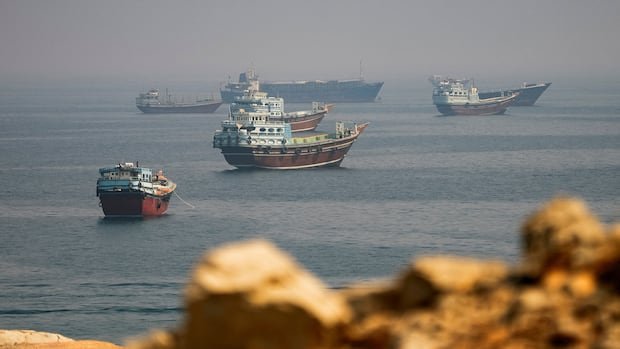

The United States conducted fresh airstrikes on Iranian targets on Tuesday, potentially escalating the ongoing conflict that has impacted global energy prices and influenced President Donald Trump’s domestic approval ratings. These strikes came after a recent exchange of fire and the attack on two tankers leaving the closed-off Strait of Hormuz, leading to a significant increase in global oil prices.
In response, Iran retaliated by targeting U.S. assets in Jordan, Bahrain, and Iraq, reaffirming its stance against oil exports from the Gulf. Despite President Trump’s warning of a strong response and Treasury Secretary Scott Bessent’s mention of impending sanctions, Iran remained resolute in its actions.
The Iranian Red Crescent reported casualties, including fatalities and injuries, at a wedding near Sirik, a coastal region along the Strait of Hormuz. The situation further escalated as both sides engaged in missile and drone attacks on various military bases, resulting in casualties and damage.
The U.S. Embassy in Qatar issued a warning to Americans in the Middle East to remain vigilant due to potential disruptions in travel and airspace closures. Efforts to mediate the conflict and reopen the vital Strait of Hormuz have so far been unsuccessful, with both Iran and the U.S. imposing blockades affecting energy exports from the region.
The United States signaled its intent to impose additional sanctions on Iran, targeting financial institutions and entities supporting the Iranian Revolutionary Guard Corps. Iranian officials expressed readiness to withstand economic pressures, emphasizing their foreign currency reserves. The situation remains tense, with prospects of a ceasefire appearing dim as both sides continue to assert their positions.