
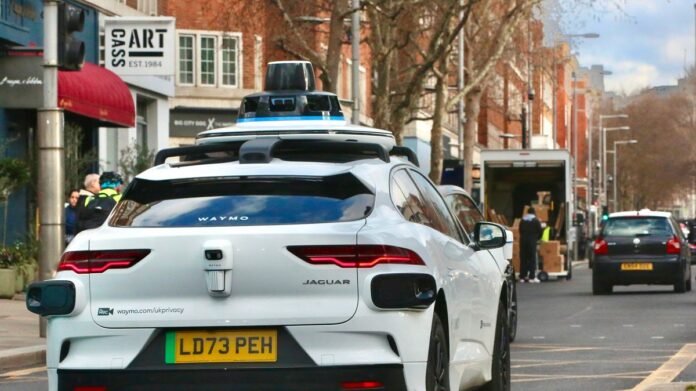

An upcoming deployment of autonomous taxis is expected to hit the roads in the UK starting this fall. Waymo, a US-based company, has confirmed its plans to introduce a fully self-driving taxi service in London later this year. The Mirror was privileged to preview Waymo’s AI-powered self-driving cabs, known as robotaxis, which are currently undergoing testing on the streets of the capital.
Before commencing passenger services, the company must receive official safety authorization. Waymo, a subsidiary of tech giant Google, asserts that its advanced technology has the potential to significantly reduce traffic accidents, as well as pedestrian and cyclist injuries.
Despite the anticipated benefits, fares for Waymo’s autonomous cabs are expected to be higher than those of traditional human-driven Uber and black cabs. The company targets individuals who are hesitant about human drivers, especially during nighttime travels, and those who value privacy.
Nicole Gavel, Waymo’s senior director and head of business development and strategic partnerships, stated, “Our aim is to be the most trusted driver globally. We believe we can substantially enhance road safety.” She also described the experience of riding in one of their cabs as “magical.”
While Waymo has not disclosed the exact size of its planned London fleet, it currently operates 1,000 vehicles in San Francisco and 700 in Los Angeles. The company has not excluded the possibility of expanding its self-driving cab services to other cities and towns in the UK.
In a parallel development, Uber is also initiating trials of robotaxis in London. Waymo executives claim that their cutting-edge vehicles can adapt to the diverse driving conditions in the UK, from complex road layouts to inclement weather.
The company’s technology is designed to continuously monitor its surroundings and predict potential hazards, such as pedestrians unexpectedly emerging onto the road. According to Ben Loewenstein, head of policy and government affairs for Waymo in the UK and Europe, the technology offers a heightened level of perception beyond human capabilities.
Waymo’s technology will be integrated into a fleet of electric Jaguar I-Pace cars. However, there are skeptics like Steve McNamara, general secretary of the Licensed Taxi Drivers’ Association, who question the public’s trust in fully autonomous vehicles for everyday tasks like transporting children to school.
Andy Prendergast, GMB national secretary, emphasized the need to consider the significant social implications, including potential unemployment, associated with the introduction of driverless cars and taxis. Notably, Tesla’s self-driving software has been involved in several accidents in the US, including a fatal incident.
As of the present stage, Waymo’s London taxis are equipped with advanced features but are not yet operational. Despite their futuristic appearance, the interiors resemble typical luxury vehicles with leather seats. The inclusion of a touchscreen tablet and other innovative gadgets indicates a unique travel experience.
During the ongoing testing phase, human drivers are still in control of the Waymo vehicles. The upcoming transition to fully autonomous operations is expected to be a groundbreaking moment for the company and the public.
The success of Waymo and similar companies in introducing autonomous driving technology in the UK hinges on public acceptance, akin to the positive reception witnessed in American cities. While there may be a surge of individuals eager to experience a driverless ride, the willingness to pay a potentially substantial premium remains uncertain.