
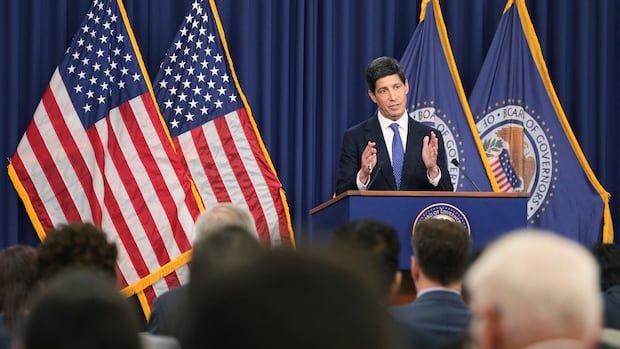

The Federal Reserve of the United States has increased its benchmark interest rate for the first time since 2023 to address persistent high inflation. The quarter-point rise brings the Fed’s key rate to approximately 3.9 percent and could lead to increased borrowing costs for mortgages, auto loans, and credit cards for Americans. This move comes amidst challenges with high expenses for groceries, fuel, and housing, which have made affordability a significant concern ahead of the upcoming midterm elections.
In their quarterly projections, the Fed indicated that they anticipate another rate hike later this year, potentially raising the rate to 4.1 percent. Fed Chair Kevin Warsh, appointed by President Donald Trump, highlighted the economy’s acceleration since the previous decision to maintain rates in July. With inflation consistently exceeding the Fed’s target of two percent, Warsh emphasized the urgency to address the high inflation levels.
The Federal Reserve policymakers unanimously supported the rate hike, aiming to facilitate a quicker return to the two percent inflation goal. Concerns over escalated gas prices due to the U.S.-Iran tensions further reinforced the decision to raise rates. Warsh has reiterated the Fed’s commitment to curbing inflation, aligning policy decisions with data-driven insights.
Despite previous considerations for rate reductions, Warsh’s current stance emphasizes inflation control. While advocating for an independent approach as Fed chair, Warsh’s recent actions demonstrate a shift towards prioritizing inflation management over accommodating lower borrowing costs, as previously suggested.
In light of the ongoing geopolitical uncertainties and the impact of the Iran conflict on gas prices, broader inflation concerns persist. Recent data indicates a rise in core prices, excluding food and energy, in August. The annual inflation rate, based on the Fed’s preferred measure, stood at 3.7 percent in July compared to the previous year.
Consumer spending remains robust, as reflected in the significant increase in retail sales in August, indicating sustained economic activity. While uncertainties persist, domestic spending resilience, coupled with substantial investments in AI data centers, has supported economic momentum.
The possibility of additional rate hikes remains, with Wall Street investors anticipating three hikes in total, including potential increases in December and March. Despite the rate hike in the U.S., economists suggest that similar actions may not be imminent in Canada. Rising inflation driven by energy prices, influenced by the Iran conflict, has led to inflation rates above the Bank of Canada’s two percent target.
While inflation pressures are evident in both countries, the U.S. faces a more severe inflation challenge compared to Canada. The U.S. core inflation measures are higher than those in Canada, indicating a greater need for inflation control measures in the U.S. Factors such as tariffs and higher unemployment contribute to Canada’s comparatively weaker economic conditions, reducing the immediate pressure for rate hikes.
Economic forecasts indicate diverging paths for the U.S. and Canada, with expectations of rate hikes in the U.S. in the near term and a more cautious approach by the Bank of Canada, delaying potential rate adjustments until 2027.